Recent content

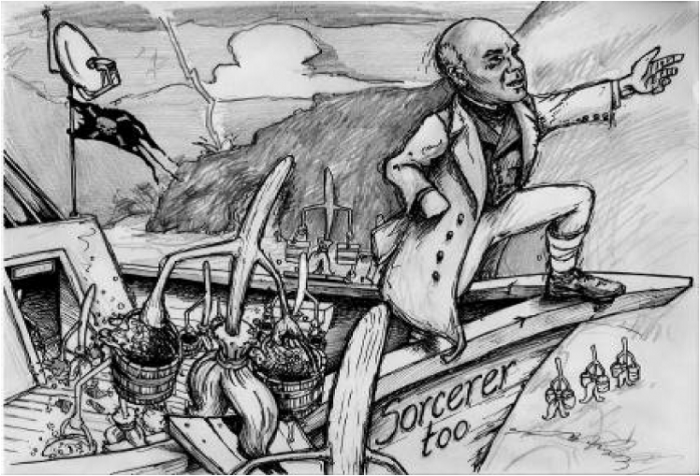
Playing God in the Galapagos

J. Craig Venter, Master and Commander of Genomics, on Global Expedition to Collect Microbial Diversity for Engineering Life

The ETC Group releases a new Communiqué today (11.02.2004) that focuses on J. Craig Venter’s controversial ocean expedition that is circumnavigating the globe to collect microbial diversity from gene-rich seas and shores every 200 miles.

J. Craig Venter, the genomics mogul and scientific wizard who recently created a unique living organism from scratch in a matter of days, is searching for pay-dirt in biodiversity-rich marine environments around the world. Venter’s yacht, the Sorcerer II, is now steaming toward the South Pacific after collecting land and marine microbes from Maine to Mexico, Panama, Chile, and — most recently — on Ecuador’s famous Galapagos Islands.

US-Latin Accord Undermines Biosafety Meeting In Malaysia

As negotiations come to a head in Kuala Lumpur at the first meeting of the Biosafety Protocol of the UN Convention on Biological Diversity (CBD) the United States along with Canada and a few Latin American states seem poised to render the 86-nation agreement irrelevant. News earlier this week that the Argentine Government has offered to collect taxes from its GM soybean farmers in lieu of royalty payments has stunned many delegations attending the meeting in the Malaysian capital.

Argentina anuncia que subsidiará a Monsanto

Mientras las negociaciones alcanzan un punto crucial en Kuala Lumpur durante la primera reunión del Protocolo de Bioseguridad del Convenio de Diversidad Biológica (CDB) de las Naciones Unidas, Estados Unidos, junto con Canadá y algunos países latinoamericanos se preparan para echar a la basura el acuerdo que tienen 86 naciones. Por otro lado, el gobierno de Argentina ofreció colectar impuestos de sus productores de frijol de soya como sustituto del pago de regalías desconcertando a muchas delegaciones que asistieron a la reunión en la capital malaya.

Itty-bitty Ethics: Bioethicists see quantum plots in nanotech concern...and quantum bucks in buckyball brouhaha?

In a paper released 28th January 2004, five University of Toronto (UT) ethicists accuse Prince Charles of "fear-mongering" and ETC Group of condemning poor nations to exports of "bananas and t-shirts." The authors speak enthusiastically about the potential of nanotechnology to improve conditions in the developing world and they express dismay that, in their view, "commentators" are now focusing primarily on risks instead of benefits. ETC Group responds.

BioPirates of the South China Sea: Captain Hook Awards Ceremony 2004

Hook meets COPs at the UN's Biodiversity Convention in Malaysia Friday the 13th Awards for Outstanding Malchievements

The Coalition Against Biopiracy (CAB) will present its highly un-coveted Captain Hook Awards – for infamous and outstanding malchievements in biopiracy – at the Biodiversity Convention (CBD) in Kuala Lumpur, Malaysia, Friday the 13th of February 2004. This is the third Global Biopiracy Awards ceremony since the Captain Hook awards were established in 1995. The previous awards were given out in ceremonies at the sixth meeting of the CBD (COP 6) in The Hague in 2002 and at the CBD's fifth meeting in Nairobi in 2000 (COP 5). The Coalition Against Biopiracy emphasizes that the Captain Hook Awards are a collaborative effort, made possible by the vigilance and analysis of many civil society and peoples’ movements around the world. This year, for the first time, the public was invited to make nominations by submitting claims along with full documentation to the CAB's web site at www.captainhookawards.org.

Oligopolios 2003: Control y nuevas tecnologías

Según datos del Banco Mundial, para 2003 se mantuvo la tendencia que inició con el nuevo milenio: de las cien mayores economías del planeta, 51 son corporaciones trasnacionales y 49 son países. Según su producto interno bruto (PIB), los países que encabezan la lista son: Estados Unidos, Japón, Alemania, Reino Unido, Francia, China, Italia, Canadá, España, México, India, Corea, Brasil, Holanda, Australia, Rusia, Suiza y Bélgica. Sigue la cadena de supermercados Wal-Mart, con ventas por valor de 246 mil 525 millones de dólares durante 2002. Es mayor que el PIB de Suecia, Austria o Noruega. Luego se encuentran General Motors, Exxon Mobil, Shell, BP, Ford, Daimler Chrysler, Toyota, General Electric, Mitsubishi, Citigroup, ING Group, IBM y otras. Las petroleras y fabricantes de automóviles han estado por décadas entre las mayores economías del planeta. Se sumaron hace años las firmas de electrónica y los grandes grupos financieros, como aseguradoras y bancos. Desde comienzos de siglo, Wal-Mart se ha mantenido como la empresa más grande del planeta, rebasando a las anteriores. Otros megasupermercados escalan rápidamente: Carrefour, SA, y Royal Ahold tienen volúmenes de venta mayores que el PIB de países como Perú y Nueva Zelandia. Le siguen de cerca procesadoras de alimentos y bebidas como Nestlé y Vivendi e hicieron su entrada a las cien mayores economías globales las trasnacionales farmacéuticas, con Merck & Co en el puesto 99, según las ventas de 2002. Durante 2003, la fusión de los gigantes farmacéuticos Pfizer y Pharmacia aseguró un puesto mucho más arriba en la escala, colocándose 40 por ciento arriba de Merck en volumen de ventas.

Del confinamiento global al autoconfinamiento: Una crítica al CBD y las Directrices de Bonn

Desde 1994 el Convenio sobre Diversidad Biológica (CDB) ha prometido "reparto de beneficios" a los pueblos indígenas a cambio de tener acceso a su biodiversidad (es decir, por hacer bioprospección). Durante diez años los pueblos indígenas y las comunidades agrarias han trabajado muy duro para hacer valer este derecho. La respuesta de los gobiernos se encuentra en las denominadas "Directrices de Bonn."

From Global Enclosure to Self Enclosure: Ten Years After - A Critique of the CBD and the "Bonn Guidelines" on Access and Benefit Sharing

Since 1994, the Convention on Biological Diversity (CBD) has been promising "benefit sharing" to Indigenous Peoples in return for access to biodiversity (i.e., bioprospecting). During these ten years, Indigenous Peoples and farming communities have worked long and hard to realize this goal.

México, caballo de Troya de los transgénicos en América Latina

México acaba de firmar un acuerdo con Estados Unidos y Canadá para burlar los requerimientos del Protocolo de Bioseguridad internacional y promover que sigan entrando en territorio mexicano granos contaminados con transgénicos, librando de responsabilidad a empresas y países que los producen. El acuerdo fue signado el pasado 29 de octubre por Víctor Villalobos, de la Secretaría de Agricultura de México (Sagarpa); J. B. Penn, del Departamento de Agricultura de Estados Unidos, y Andrew Marsland, del Ministerio de Agricultura y Agroalimentos de Canadá. México promueve además que el acuerdo se extienda a otros países latinoamericanos. Según Blair Commber, director de Agricultura de Canadá, Argentina, Brasil y Uruguay ya han manifestado su interés.

Oligopolio, S.A.

Más de la mitad de las mayores economías del mundo son corporaciones transnacionales y no países.(1) Las transnacionales tienen un poder sin precedentes para influir en las políticas sociales, económicas y de comercio. La hegemonía corporativa está usurpando el papel y las responsabilidades de los gobiernos, amenazando la democracia, y los derechos humanos. El Grupo ETC (anteriormente RAFI) ha monitoreado el poder corporativo y las tendencias que siguen las "ciencias de la vida" durante las dos últimas décadas.

Oligopoly, Inc. - Concentration in Corporate Power: 2003

Over half of the world's 100 largest economic entities are transnational corporations (TNCs), not nations. TNCs have unprecedented power to shape social, economic and trade policies. Corporate hegemony is usurping the role and responsibilities of national governments, threatening democracy and human rights. Over the past two decades ETC Group (formerly as RAFI) has monitored corporate power and trends in the "life sciences." Consolidation, technological convergence and non-merger corporate alliances are among the trends examined in this issue of ETC Communiqué.

Stop GM contamination!

An open letter to Mexican government authorities and intergovernmental bodies was sent, signed by 302 organizations from 56 countries, demanding actions to stop contamination of farmers' maize with DNA from genetically modified (GM) maize, and to prevent any further contamination in the world's centers of crop diversity and origin. The open letter, see "Open letter from international civil society organizations, News Release; November 19, 2003" asks the Mexican government to maintain the moratorium against the planting of transgenic maize in Mexico, stop the importation of transgenic or non-segregated maize - likely the main source of contamination in Mexico- and conduct urgent studies to determine the extent of the contamination.

Massive International Protest on GM Contamination of Mexican Maize

An open letter to Mexican government authorities and intergovernmental bodies was sent today, signed by 302 organizations from 56 countries, demanding actions to stop contamination of farmers' maize with DNA from genetically modified (GM) maize, and to prevent any further contamination in the world's centers of crop diversity and origin.

Protesta internacional masiva por la contaminación transgénica del maíz en México.

¡Llamado a la acción!

En el día de hoy, 302 organizaciones de 56 países del mundo enviaron una carta abierta a las autoridades mexicanas y organismos internacionales, exigiendo que se tomen acciones para parar la contaminación del maíz campesino con ADN modificado genéticamente y prevenir que se sigan contaminando los centros de origen y diversidad de los cultivos en el mundo.

Terminator Technology Debate Hijacked in Montreal

Terminator – or genetic seed sterilization – has been on the agenda of the United Nations’ Convention on Biological Diversity (CBD) for five years. If the Gene Giants and governments get their way, the CBD will be conducting studies on Terminator for years to come – long after suicide seeds are commercialized and show up in farmers’ fields.

At the ninth meeting of the CBD’s scientific advisory body (SBSTTA 9) held November 10-14 in Montreal, four governments – Canada, New Zealand, Argentina and Brazil – were allowed to highjack debate and stall action on Terminator by insisting that the CBD postpone consideration of an expert technical report on the impacts of genetic seed sterilization, arguing that the report lacks scientific rigor. While the report will be forwarded to next February’s Conference of the Parties (COP7) in Kuala Lumpur, Malaysia, it will go with a recommendation that COP7 forego action and re-direct the report to the next meeting of the scientific body (SBSTTA10) – in late 2004 or 2005 – with the aim of providing advice to COP8 in 2006!

La otra cara de la contaminación

Refiriéndose a la contaminación del maíz campesino en México, Michael Phillips, director ejecutivo de la Organización de la Industria Biotecnológica de Estados Unidos (BIO), recomendó el 10 de octubre pasado, en una entrevista a Mark Schapiro en The Nation, rendirse ante las evidencias y abrirse alegremente a la contaminación: "Si usted fuera el gobierno de México, espero que haya aprendido la lección: es muy difícil contener una nueva tecnología para que no pase sus fronteras, especialmente en un sistema biológico... ".

Nanotech Meets the Environment

Making a Mole Hill out of a Mountain?

ETC Group today (October 2003) released a 6-page Communiqué on the use of nanotechnology-based products in the environment - products that are coming to market in the absence of both government oversight and public discussion. A recent large-scale application of a product touted to control soil erosion using nanotechnology highlights regulatory inadequacies and lack of clarity in the nanotech industry.

Nanotechnology - whose best-known commercial successes have thus far been stain-resistant fabrics, stronger and lighter tennis rackets, and transparent sunscreens - has spawned new environmental products to prevent erosion or to clean up contaminated sites. While the companies claim these products will be beneficial to the ecosystem, in the absence of government regulatory oversight, the unknown short- and long-term implications raise concerns for health and for the environment.

Páginas

Suscribirse a Recent content