Recent content

El CDB necesita reforzar la precaución sobre geoingeniería para proteger a la biodiversidad

Resumen para delegadas y delegados

El Convenio de las Naciones Unidas sobre la Diversidad Biológica (CDB) ha sentado precedente a nivel global, al abordar y prevenir los impactos potenciales de la geoingeniería sobre la biodiversidad y las personas.

El Long Food Project: Herramientas para fortalecer los sistemas alimentarios encabezados por los pueblos

Para conmemorar el Día Mundial de la Alimentación (16 de octubre de 2023), IPES-Food y Grupo ETC comparten una serie de recursos prácticos destinados a ayudar a todos aquellos de nosotros en organizaciones y movimientos de la sociedad civil de todo el mundo que rechazamos los “agronegocios como siempre” y que trabajamos para fortalecer los sistemas alimentarios liderados por las personas en consonancia con la justicia social y la supervivencia del planeta.

Affirming precaution on geoengineering and other dangerous distractions

Climate and biodiversity

9 - AFRICA, 2nd floor
October 17, 2023  |  1:15pm
Light refreshments will be served


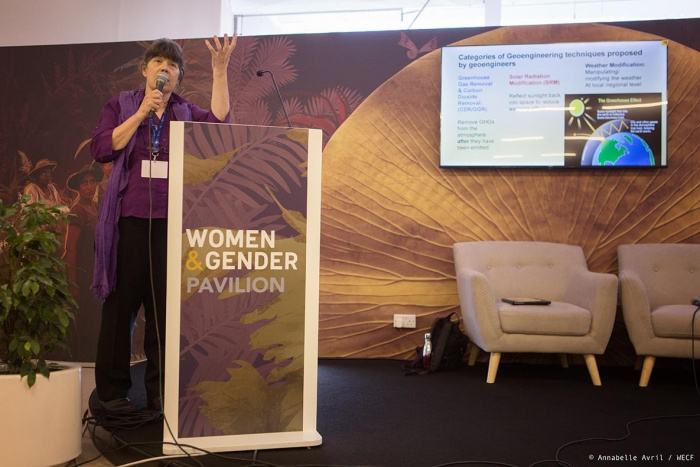
Affirming the CBD’s leadership in taking precautionary decisions on geoengineering is urgent for the world to take real climate action and avoid false solutions.

Join us to learn about the latest dangerous distractions being promoted by geoengineers and hear from experts, civil society and governments who support precaution on geoengineering.
 

Long Food Project launches new tools to strengthen people-led food systems

To mark World Food Day (16 October 2023), IPES-Food and ETC-Group  are launching a series of practical resources aimed at helping all those of us in civil society organisations and movements around the world who reject “agribusiness-as-usual” and are working to strengthen people-led food systems in line with social justice and the planet’s survival. 

These Long Food Project resources encourage us to think decades ahead and collectively plan for the future.

Industrial seaweed will not cool the climate or save nature, new report says

Research shows that mass seaweed plantations pose a major threat to marine ecosystems and are unlikely to capture or permanently store significant quantities of carbon.

September 20, 2023 - A report published today by the international research organization ETC Group casts serious doubts on seaweed as an emerging “blue carbon” industry. Their research shows that mass seaweed plantations pose a major threat to marine ecosystems and are unlikely to capture or permanently store significant quantities of carbon.[1]

Solar Geoengineering could cause a climate disaster, we need to stop it

Overshoot Commission report endorses unproven carbon removal technology, opens door to solar geoengineering
Esquema de geoingeniería solar, de la página de Sola Geoengineering Non-Use Agreement

MEXICO, PHILIPPINES, CANADA – As one of the first civil society organizations to raise the alarm about the dangers of geoengineering, ETC Group strongly opposes the Climate Overshoot Commission’s report launched in New York today, especially its endorsement of unproven carbon removal technology, and the potential for this report to open the door to solar geoengineering. (Image from Solar Geoengineering Non-Use Agrement).
 

The Seaweed Delusion

Industrial seaweed will not cool the climate or save nature

As the world scrambles for a climate fix, seaweeds – or “macroalgae” – have been thrust into the limelight. Buoyed up by hype and hundreds of millions of dollars of so called “green” investment, a new “blue carbon” seaweed industry is invading coasts and seas, ostensibly under the umbrella of the 2015 Paris Agreement on Climate Change.

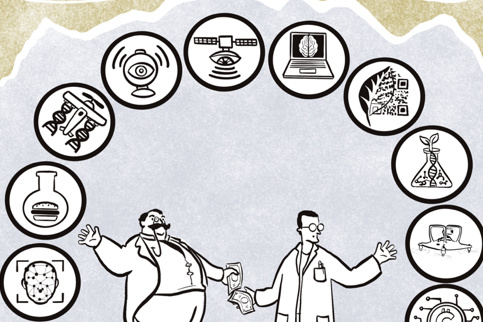
The “Immaculate Conception of Data” – and why it’s a problem

Episode 2 of 'Who will control the food system?'
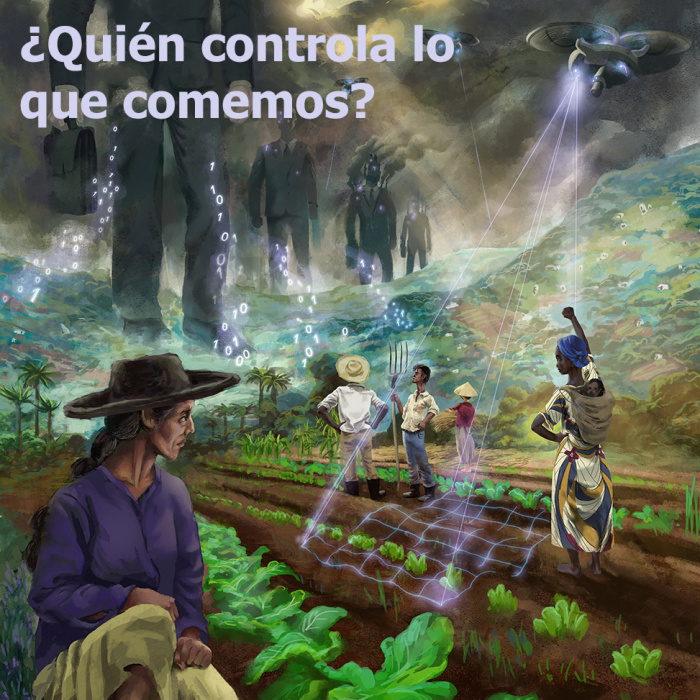
Food Barons report cover art showing peasants resisting corporate digital giants

Tune into the next episode in our latest podcast mini-series, Who Will Control the Food System, where we uncover just who's pulling the strings of industrial agriculture, dissect the latest corporate strategies, and take inspiration from the peoples and movements fighting back.

Hacinamiento, virulencia y crisis multidimensionales

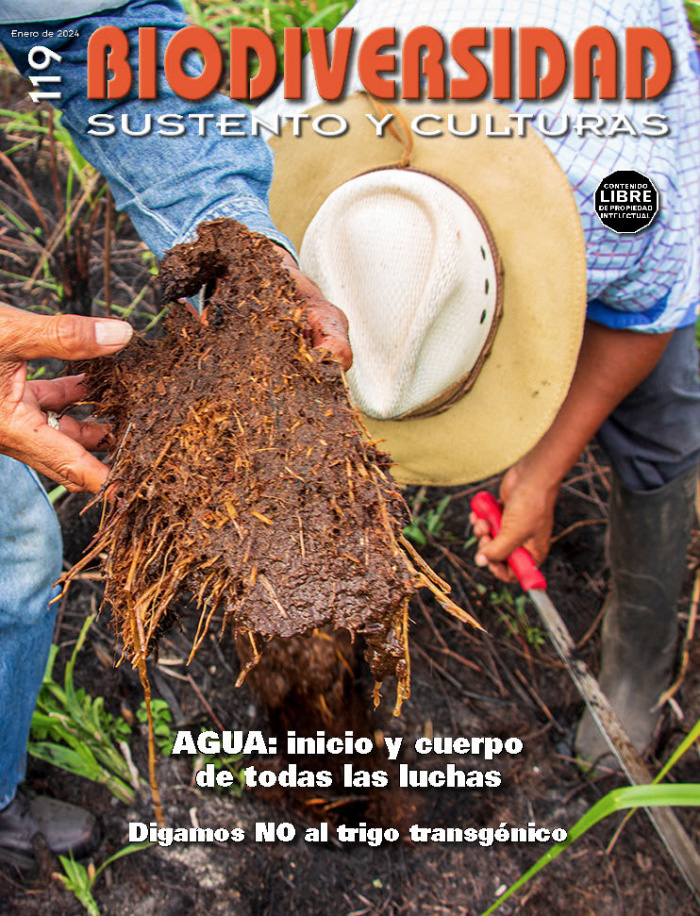
Biodiversidad, sustento y culturas num. 117

La revista Biodiversidad, sustento y culturas número 117 (Hacinamiento, virulencia y crisis multidimensionales) es un compendio de textos sobre la producción industrial de animales hecho por organizaciones latinoamericanas que ven desde primera fila la sucia producción industrial de reses, cerdos, peces, “carne imposible” y las crisis de contaminación y enfermedad que conlleva.

Big Tech jumping on the food band wagon

Episode 1 of 'Who will control the food system?'
Food Barons report cover art showing peasants resisting corporate digital giants

Industrial agriculture is not so much jumping on the “Food Systems Transformation” band wagon as trying to steal it!

Don’t fall for the UN’s new Food Systems Coordination Hub hype about “Transforming Food Systems for Planetary Health”. The current corporate agenda, championed by this new “Hub” is firmly focused on hijacking the UN’s existing food systems spaces to force through yet another phase of Industrial Agriculture – promoting its technofixes as solutions to the very problems that it itself has caused, including in relation to climate change and biodiversity loss.

FUEGO

Biodiversidad, sustento y culturas No. 116, abril-junio 2023

La revista Biodiversidad, sustento y culturas dedica su número de abril-junio al FUEGO.

No to geoengineers’ technofix gold rush, yes to Real Zero!

Join civil society event at Bonn climate change "intersessionals"
Flyer repeating event details in text

Previously buried within the UNFCCC’s negotiating corridors and committees, a new technofix gold rush has been stealthily emerging in global climate change negotiations – with potentially disastrous implications for the world’s fight against climate change. 

Ditching techno-patriarchy and the ‘permacrisis’

The ongoing digitalisation tsunami is likely to usher in a new worldwide wave of gender-based impacts.

As CSW67 turns its attention to digitalisation, like the rest of the United Nations, this Briefing zooms in on less-discussed aspects of the ongoing digitalisation tsunami, which is likely to usher in a new worldwide wave of gender-based impacts, as the techno-patriarchy, along with Big Ag and other industries, relentlessly dreams up new ways of turning a profit by digitalising as many sectors as possible (often in extraordinarily far-fetched and unnecessary ways).

Biodiversidad, Sustento y Culturas No. 115

Número dedicado a la Soberanía Alimentaria
El mundo ha perdido la sencillez con la que lo leíamos apenas hace unos años. El signo de nuestra época es la complejidad que puede tragarnos, dejándonos en la ceguera o cayendo en los remiendos y las “falsas soluciones” que promueven las corporaciones al cazar, minuto a minuto, más oportunidades para prevalecer, para lucrar, para que sus esquemas sean aceptables y sonrientes.
 
Nadando en esa complejidad, se puso de moda invocar la soberanía alimentaria como “alternativa”.

Groupe de la Banque Africaine de Développement: Sommet Dakar 2

L’agriculture intelligente face au climat renforcera la crise climatique

Alors que les chefs d’État africains se rendent à Dakar pour le Sommet africain de l’alimentation Dakar 2, 83 organisations de la société civile africaine et internationale ont signé une déclaration collective s’opposant à l’approche de « l’agriculture intelligente face au climat » (AIC) du sommet.

Statement on the African Development Bank's Dakar 2 Summit

“Climate smart agriculture” will worsen the climate crisis
Food Barons report cover art

As African heads of state travel to Dakar for the African Development Bank Group’s Dakar 2 African Food Summit, 83 African and international civil society organisations have signed a collective statement opposing the summit’s “climate smart agriculture” approach.

Páginas

Suscribirse a Recent content