Annual Report
Enviado por ETC Staff el
Enviado por ETC Group el
Enviado por ETC Staff el
Phytophtora infestans, also known as the "late potato blight" is the fungus that caused the Great Potato Famine of 1845-49. One hundred and fifty years later, the blight is back again in new and deadlier forms. Will governments muster the political will to wage a true war against hunger and food insecurity? A nine page document.
Enviado por ETC Staff el
A detailed examination of the impact of the US Plant Patent Act. Passed by the US Congress in 1930, the PPA is the world's oldest sui generis intellectual property system designed for the patenting of life forms.
Enviado por ETC Staff el
In the race to identify patent and commercialize human genes, scientists and their corporate partners are collecting DNA samples from remote island populations in the South Atlantic, Micronesia and the east China sea. This issue highlights Sequana's search for the "asthma gene" derived from DNA samples collected from the people of Tristan da Cunha.
Enviado por ETC Staff el
In 1995, Calgene commercialized a genetically modified rapeseed that produces the lauric fatty acid - a product derived traditionally from tropical oils Will Calgene's high-lauric rapeseed displace markets for coconut and palm kernel oil producers in the tropics?
Enviado por ETC Staff el
Privatization and patenting of microorganisms is encouraged by WTO TRIPs. RAFI examines the value of microbial markets and microbial biopiracy.
Enviado por ETC Staff el
This document reviews the year-long controversy over Agracetus's species-wide patent on all genetically modified soybean varieties. In April 1994, with the support of 18 CSOs worldwide, RAFI announced it would formally challenge the patent at the European Patent Office. A summary of RAFI's opposition statement appears here. A 14 page document.
Enviado por ETC Staff el
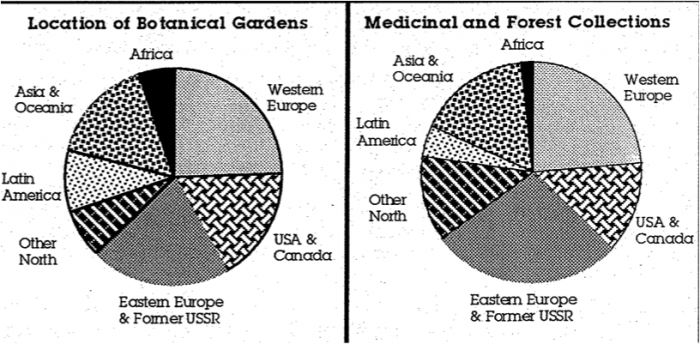
Pharmaceutical companies dont want to study rare plants. They want to test the most - commonly used species. The valuable medical plants are those with the longest track record in the most location. In a survey of almost 1.000 medical plants used around the world, most of the pharmacologically - (and commercially) interesting species are employed in more than one community, and often, in several countries. This is great news for BioPirates, who can move benevolently from place to place in search of the best deal.
Enviado por ETC Staff el
Who benefits from agricultural biodiversity that originates in the farms, fields and forests of the South? A 14 page document.
Enviado por ETC Staff el
One of the most eagerly awaited publications in the plant genetic resources (PGR) community. - Diversity 1994, 10(2), 25
The recent GATT agreement and the Biodiversity Convention have moved intellectual property rights to the centre of South-North relations.
Decisions about intellectual property, particularly for plant life, have major implications for food security, agriculture, rural development, and the environment for every country in the South and the North. For the South, in particular, the impact of intellectual property on farmers, rural societies, and biological diversity will be profoundly important.
* Patents granted for genetically engineered cotton could profoundly influence the future of a $20 billion crop critical to many national economies in the South.
* Farmers' organizations in Andean countries believe that patents granted for two varieties of coloured cotton do not recognize the major contribution to the new product by indigenous communities in South and Central America.
Enviado por ETC Staff el
L'aboutissement recent de la negociation du GATT et la signature de la Convention sur la diversite biologique ont place les droits de propriete intellectuelle au premier plan des relations Nord-Sud.
Les decisions prises en la matiere, notamment en ce qui a trait aux ressources du regne vegetal, ont d'importantes implications pour la securite alimentaire, l'agriculture, le developpement rural et l'environnement de tous les pays, au Nord comme au Sud. Pour ces derniers en particulier, l'incidence de la propriete intellectuelle sur les agriculteurs, les societes rurales et la biodiversite revetira une extreme importance.
Enviado por ETC Group el
Enviado por ETC Staff el
With the advent of new biotechnologies and the emergence of new international agreements, microbial genetic resources are taking on growing importance in North/South negotiations. A 51 page document.
Enviado por ETC Staff el
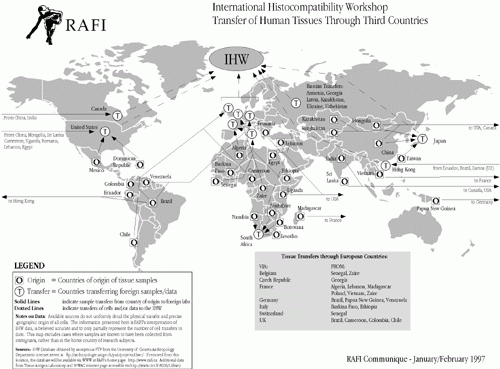
ISSUE: Despite international controversy over the patenting of human genes and other life forms, US-based genomic companies (in partnership with major pharmaceutical corporations), are filing patents for exclusive monopoly control on human genes and gene fragments.
IMPACT: The commercial potential of genomic technologies is still untested and unproved. But the commodification of human genetic material raises many profound questions: Who will control the genes and genetic information that may someday unlock secrets to genetic diagnosis and treatment of human diseases? Will the patent grab on human genes ultimately thwart innovation as well as information exchange between public and private sector researchers, and between North and South? Who will benefit, and at what cost to society?
Enviado por ETC Staff el
Las compañías genómicas, en asociación con los gigantes de la farmacéutica están solicitando patentes para tener el control monópolico sobre genes humanos y fragmentos de genes. Incluye un panorama de las empresas dedicadas a la genómica.
Enviado por ETC Staff el
W.R. Grace, propietario de Agracetus Inc, obtuvo una patente monopólica exclusiva que cubre todas las variedad genéticamente modificadas de soya. Esta es la segunda patente de "especie" que obtiene la compañía. La patente implica una grave amenaza a la seguridad alimentaria mundial.
Para saber más sobre el Grupo ETC o para contactarnos.