|
From the introduction:
International efforts to address the food, energy and climate crises give technology a central role to play. While some technologies may offer potential solutions to specific problems, decades of accelerating technological development and deployment have done little to mitigate climate change, and, in many cases, have made problems worse.
Now, new high-risk technologies, ranging from the very small (synthetic biology,genomics, nanotechnology) to the very large (geoengineering), are rapidly developing.Their promoters promise that these technologies are key to solving climate change,world hunger, energy shortages and biodiversity loss. The precautionary principle andsocial and economic impacts are often ignored in the rush to deploy the latest technofix,marketed as socially useful and cutting edge, such as “climate-smart agriculture” or“next-generation biofuels.” Without the strict application of the precautionary principle,and a...
Leer más
|
|

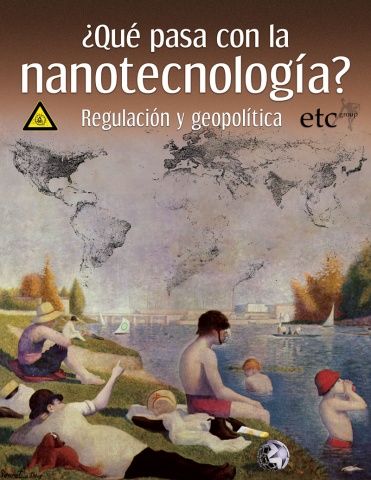
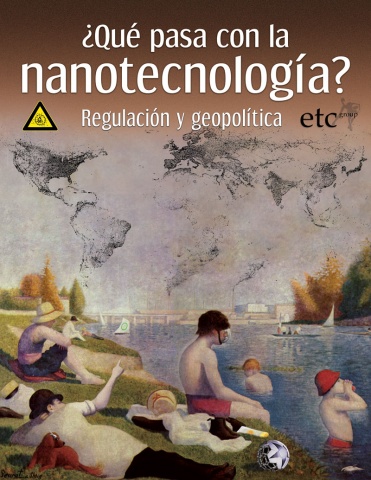
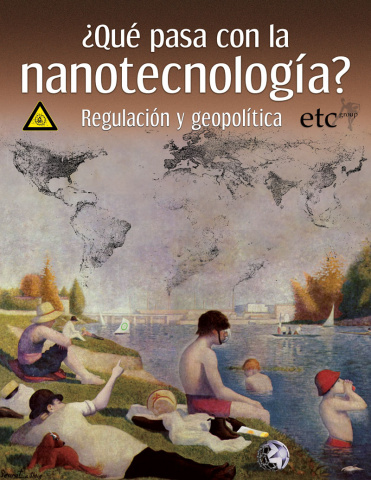
En los últimos cinco años desde que el Grupo ETC publicó un panorama global de las tecnologías de nanoescala, el paisaje ha cambiado considerablemente —aunque dichas tecnologías aún se promueven como la llave de la competitividad económica y la respuesta a todos los problemas del desarrollo humano y el ambiente. En este documento de actualización, el Grupo ETC revisa nuevamente la geopolítica de la nanotecnología y brinda un vistazo de las actuales inversiones, los mercados y las regulaciones en torno a las tecnologías de nanoescala.
Descargue la versión completa del texto en el PDF.
Leer más
|
|
Grupo ETC
Boletín de prensa
14 de febrero de 2011
www.etcgroup.org
Nuevo informe sobre las tecnologías de nanoescala:
Pequeña contribución del Grupo ETC a la gran conversación en el Foro Social Mundial en Dakar
Cuando activistas, movimientos sociales y organizaciones de la sociedad civil se reunieron en Porto Alegre, Brasil, en el Primer Foro Social Mundial, era muy incipiente la inversión de los gobiernos en investigación y desarrollo de nanotecnología. Una década más tarde, la inversión pública rebasa los...
Leer más
|
|
ETC Group News Release
10 February 2011
www.etcgroup.org
New Report on Global Governance of Nano-scale Technologies:
ETC Group’s “Little” Contribution to the Big Conversation in Dakar
When activists, social movements and civil society organizations came together in Porto Alegre, Brazil for the first World Social Forum (WSF), governments had just begun pouring money into nano R&D. Now, a decade later, public investment has surpassed US$50 billion and averages $10 billion a year.
Meanwhile, an estimated 50,000...
Leer más
|
|
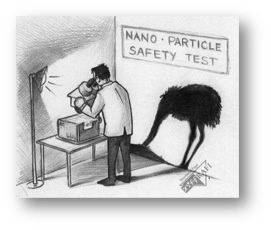
The Big Downturn? Nanogeopolitics
A New Report from ETC Group
The Big Downturn? Nanogeopolitics, ETC Group’s new 68-page report on global governance of nanoscale technologies, is an update of our 2005 Nanogeopolitics survey. In the intervening five years, policymakers – some kicking and screaming – have begun to acknowledge that fast-tracking nanotech has come at a price and that some sort of regulation is needed to deal with at least some of the risks nanoscale technologies pose. But governments and industry, hand in hand, have come too far and invested too much to give up on nanotech’s promise of becoming the strategic platform for global control of manufacturing, food, agriculture and health – a pillar of the 21st century’s “green economy.” This report revisits nano’s geopolitical landscape, providing a current snapshot of global investment, markets,...
Leer más
|
|
GEOINGENIERÍA: Jugando con GAIA
La geoingeniería es la manipulación intencional, en gran escala, de los sistemas de la Tierra mediante la alteración artificial de los océanos, los suelos y la atmósfera. Más que un conjunto de tecnologías, se trata de una estrategia política. En vez de enriquecer y proteger la biodiversidad, la geoingeniería propone crear las condiciones que nos permitan continuar con los excesos que causaron la crisis ecológica y social actual. Permite que los gobiernos responsables de casi todas las emisiones de gases con efecto de invernadero evitar la compensación al Sur global, que no es culpable del cambio climático, pero que sufre sus devastadores efectos. En otras palabras, la geoingeniería ofrece una “salida” tecnológica a los mismos gobiernos e industrias que crearon la crisis climática y se niegan a asumir políticas que como mínimo mitiguen los daños causados.
Las consecuencias de las...
Leer más
|
|
News Release - 21st April 2010 - For Immediate Release
Hands Off Mother Earth!
Civil Society Groups announce new global campaign against geoengineering tests – urge public to join in.
www.handsoffmotherearth.org
Cochabamba Bolivia - On the eve of UN Mother Earth Day, over sixty national and international organizations today threw their weight behind a common statement launching a global campaign to prevent real world deployment of geoengineering experiments.
Geoengineering refers to large-scale intentional tinkering with the climate and earth systems to counteract global warming. The ‘Hands Off Mother Earth’ campaign (or H.O.M.E. campaign) regards such geoengineering schemes as dangerous and unjust. It is urging individuals and organizations to speak out in opposing them.
“With rich...
Leer más
|
|
In the name of moving “beyond petroleum,” Big Oil, Gene Giants, governments, start-ups and others are forming partnerships that will extend corporate control over more resources in every part of the globe – while keeping the root causes of climate change intact. With grudging recognition that first-generation agrofuels are neither economical nor ecological, investors turn to other life-based technologies, including synthetic biology, for the next alternative fuel fix. Issue: In OECD countries, massive government incentives and subsidies – estimated to be as high as US$15 billion/year – are stoking the agrofuels1 boom and spurring unprecedented alliances that extend corporate power over a larger share of the world’s resources.2 Big Oil, Big Ag, Big Brains (and more) are teaming up to reap the only certain benefit of agrofuels – increased profits. In this Communiqué, ETC Group maps the new corporate alliances propelled by (and propelling) the scramble for...
Leer más
|
|
Boletín de prensa
15 de mayo de 2009
**La segunda Conferencia Internacional sobre Manejo de Químicos (ICCM, por sus siglas en inglés), celebrada en Ginebra del 11 al 15 de mayo, terminó hoy. La ICCM discutió sobre nanotecnología y sobre partículas manufacturadas como un tema de política emergente por primera vez. Diana Bronson del Grupo ETC asistió a la reunión y trabajó con organizaciones afines para presionar a la Conferencia a que realice acciones efectivas en torno a las tecnologías de nano escala.**
Ginebra, 15 de mayo de 2009. “Las acciones sobre nanotecnología que se acordaron hoy no reflejan la urgencia del tema. Se alertó a los delegados de que los nanomateriales constituyen un riesgo intergeneracional, puesto que las nano partículas se pasan de madre a hijo vía la sangre materna, sin embargo esos riesgos parecen haber sido ignorados en la...
Leer más
|
|
**The Second International Conference on Chemicals Management (ICCM), meeting in Geneva May 11-15, closed today. The ICCM addressed nanotechnolgoy and manufactured nanoparticles as an emerging policy issue for the first time. ETC Group's Diana Bronson attended the meeting and worked with NGO partners to urge the ICCM to take effective action on nano-scale technologies.**
IPEN International POPs Elimination Network [POPs = persistent organic pollutants]
News Release
NGOs disappointed at nano outcomes from International Conference on Chemical Management
Geneva, May 15 2009 -- “The actions on nanotechnology that were agreed upon today do not reflect the urgency of the issue. The delegates were made aware that nanomaterials are an intergenerational risk, with nanoparticles being passed from mother to child via maternal blood. Yet these risks appear to have been ignored in the response by ICCM2," said Dr. Mariann Lloyd-Smith, IPEN...
Leer más
|