Recent content

Tunis 2013: If we rely on corporate seed, we lose food sovereignty

World Social Forum Event organized by La Via Campesina, GRAIN and ETC Group

GROWING POWER IN PEASANT SEEDS SYSTEMS: Farmers seeds and struggle against GMOs, AGRA- 2nd Green Revolution. Tunis, March 29.

It has become crucial to defend seeds. In the past 20 or 30 years, what was once seen as normal – peasant farmers growing, selecting, saving and exchanging seeds – has come under attack from corporations seeking to control and commodify the very basis of agriculture.

Normalizando la geoingeniería como ayuda exterior - Inteligencia artificial de la geoingeniería III

Normalizando la geoingeniería como ayuda exterior - Inteligencia artificial de la geoingeniería III
Español

Los geoingenieros tienen problemas: los modelos por computadora sugieren que bloquear la radiación solar en la zona templada del globo (para preservar el hielo del Ártico o evitar liberaciones masivas de metano) podría enfriar el hemisferio norte, pero su impacto podría llegar hasta el sur, creando severos disturbios climáticos como la disminución de los monzones de Asia o sequías totales en el Sahel.

Ayudar con traducciones

El Grupo ETC intenta brindar todos nuestros textos, investigaciones y reportes en inglés y español, y ocasionalmente traducimos los materiales al francés y portugués.

Algunas veces personas o grupos nos contactan pidiéndonos permiso de traducir algún material en otro idioma. Damos las gracias a quienes ofrezcan su ayuda voluntaria con las traducciones, lo único que solicitamos es que mantengan el crédito del Grupo ETC por la autoría del documento. También nos interesa contar con una copia de las traducciones para que podamos usarla en nuestro sitio web.  

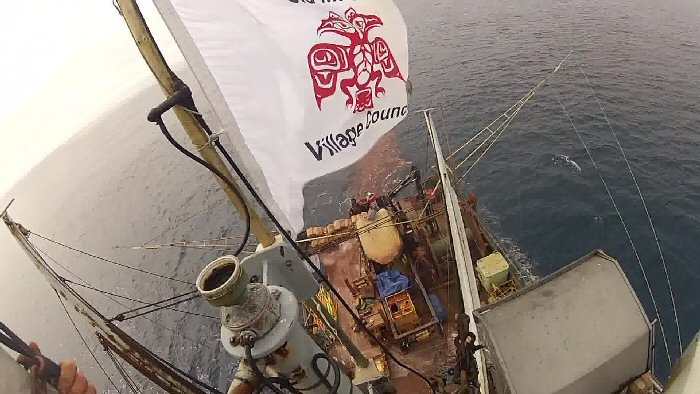
Case Study: Ocean Fertilization near Haida Gwaii

Full links and background on the 2012 ocean fertilization scheme by HSRC.

In October 2012 ETC Group uncovered that a commercial geoengineering firm had quietly carried out the world's largest geoengineering deployment to-date (in July 2012). When the news became public as a result of ETC Group's investigations, it caused a wave of concern among scientists, governments, the public and of course the people of Haida Gwaii. HSRC have since said they intend to carry out further ocean fertilization dumps. On this page we have collected some of the background on the Haida Gwaii ocean fertilization episode, how the story was reported, the legal situation, the science and more.

Documento de antecedentes sobre el vertimiento de hierro en Haida Gwaii ocurrido en 2012

Hace 6 años (2007) el Grupo ETC alertó sobre una empresa comercial de geoingeniería llamada Planktos, Inc., la cual comenzó con la navegación en el río Potomac de un navío de investigación con vistas a verter 100 toneladas de nanopartículas de hierro en las aguas de las islas Galápagos. Planktos esperaba generar una elevación en el volumen de plancton por medio de la “fertilización oceánica”, una técnica de geoingeniería dirigida a la captura de carbono en aguas marinas profundas. La “gran idea” consistía en vender bonos de carbono mediante un esquema que Russ George, director ejecutivo de Planktos denominó “más un experimento de negocios que científico”.

Estudio de caso: Fertilización oceánica cerca del archipiélago Haida Gwaii

Vínculos y antecedentes sobre el experimento de fertilización oceánica de 2012 realizado por la Corporación para la Restauración del Salmón Haida.

En octubre de 2012, el Grupo ETC descubrió que una firma comercial de geoingeniería había realizado, de manera oculta, el despliegue de geoingeniería más grande hasta el momento.

Informational Backgrounder on the 2012 Haida Gwaii Iron Dump

Almost six years ago ETC Group blew the whistle on a commercial geoengineering outfit called Planktos, Inc., which was making its way to dump 100 tons of iron nanoparticles into the waters of the Galapagos Islands . Working with allies ETC Group was able to prevent that ocean fertilisation dump. In 2012 however we were less lucky. The same geoengineering entrepeuner, Russ George, suceeded in dumping over 100 tonnes of iron into the Pacific ocean west of Haida Gwaii in Canada, claiming that his actions had prompted a 10,000 square km plankton bloom. This time his new company, The Haida Salmon Restoration Corporation (HSRC), was using millions of dollars in funds from a small indigenous community. Read here the full story of how ETC Group uncovered HSRC's rogue geoengineering scheme and the storm of international concern that ensued.

Geoengineering – The Opium of the People? Pain-killer, Plane-chiller, Plane crasher

Geoengineering – The Opium of the People? Pain-killer, Plane-chiller, Plane crasher
Inglés

In the first two months of 2013, leading advocates of geoengineering have argued variously that researching geoengineering (as a Plan B to GHG emission cuts) is like helping a cancer patient manage pain while seeking a cure; or, that an accelerating gaggle of executive jets circling the equator could spray enough sulphuric acid in the stratosphere to keep the Earth’s thermostat within bounds; or, that a single island state could thumb its nose at the military might of the major powers and geoengineer the planet to its liking. So much lobbying and still months to go before the IPCC delivers its fifth assessment report – with an anticipated treatment of geoengineering.

Biologie Synthétique, biocarburants et nouvelles technologies : Construire notre capacité d’évaluation des technologies

Atelier: Forum Social Mondial 2013

De nouvelles technologies, à haut risque, allant du très petit (nanotechnologie, biologie synthétique) au très grand (geoingénierie) sont présentement en rapide développement. Promues en tant que solutions miracles, le principe de précaution et leurs potentiels impacts sociaux et économiques sont souvent ignorés dans la course pour leur déploiement. Sans une application stricte du principe de précaution et un processus d’évaluation transparent et participatif, ces technologies pourraient avoir des conséquences désastreuses sur notre planète déjà fragilisée. Pour faire face au déploiement de technologies puissantes, la société civile doit s’organiser et travailler à développer des plateformes d’observation et d’évaluation des technologies.

Date: 
Viernes, Marzo 29, 2013 - De 13:00 hasta 15:30

WSF 2013: Geoengineering: Resisting Climate Manipulation

A side-event at the Climate Space, World Social Forum 2013

Geoengineering – the intentional, large-scale technological manipulation of the Earth’s systems – is another false solution to climate change being pushed from the global North. High-risk and high-tech schemes under development, including blasting reflective particles into the stratosphere, whitening clouds and dumping chemical compounds into the oceans, could have devastating consequences for ecosystems and for the food and water sources for billions of people. States responsible for most of the historic greenhouse gas emissions are pushing for geoengineering as they see it as “the perfect excuse” to continue business as usual – keep emitting CO2 while making new profits selling the geoengineering technologies. No government, industrial sector or billionaires club has the right to own the planet’s thermostat. Geoengineering diverts attention and resources from real solutions to climate change. In this workshop, we will provide a brief introduction to geoengineering technologies before discussing strategies to stop them. Hands Off Mother Earth!

Date: 
Viernes, Marzo 29, 2013 - De 09:00 hasta 11:30

WSF 2013: Synthetic Life, Biofuels and Other New Technologies: Building Peoples' Technology Assessment Capacity

Side-event: World Social Forum, Tunis 2013

New, high-risk technologies, ranging from the very small (synthetic biology, nanotechnology) to the very large (geoengineering), are being rapidly developed. Promoters promise solutions, but the precautionary principle and social and economic impacts are often ignored in the rush to deploy the latest technofix. Without the strict application of the precautionary principle, and a transparent and real participatory way to assess impacts, these new technologies could wreak more havoc on our already fragile planet, battered by reckless and unsustainable forms of production. To deal with the onslaught of ever more powerful technologies, civil society organizations, movements, indigenous peoples and peasant organizations need to self-organize to create Technology Observation Platforms (TOPs).

Date: 
Viernes, Marzo 29, 2013 - De 13:00 hasta 15:30

ETC Group at the World Social Forum 2013

Tunis, Tunisia

ETC Group will be participating at the 3rd World Forum on Science and Democracy and the World Social Forum 2013 that will take place in Tunis, capital city of Tunisia between 23-30 March 2013. Come join us in various activities, workshops and assemblies! We hope to meet you there!

To know more about our side event Geoengineering: Resisting Climate Manipulation, click here.

Date: 
De Sábado, Marzo 23, 2013 - 09:30 hasta Sábado, Marzo 30, 2013 - 19:30

La biologie synthétique: 10 points importants

Lors de la onzième Conférence des Parties, les négociateurs devront considérer de placer un nouveau champ d"activités industrielles sous la supervision de la Convention des Nations Unies sur la diversité biologique (CDB). La biologie synthétique est un secteur en bourgeonnement capable de créer des systèmes génétiques artificiels et de programmer des formes de vie à diverses fins industrielles. Or, il est urgent de mettre en place un cadre de gouvernance efficace pour ce secteur. Voici dix points qui doivent être gardés à l'esprit.

Gene Giants Seek “Philanthrogopoly”

Ag monopoly makes mergers suspect – Big Six create “charity” cartel instead, conning regulators and public breeders

Issue: The Gene Giants know their market dominance looks conspicuously like an anticompetitive oligopoly, so they’re launching a series of initiatives – including the false promise of cheap, post-patent GE seeds – to mollify antitrust regulators and soften opposition to transgenics while advancing their collective market control. Meanwhile, the world’s two richest men – Bill Gates and Mexico’s Carlos Slim – are working with CIMMYT (the International Maize and Wheat Improvement Center) to make bargain GE seeds and traits available to farmers in the global South.

Los gigantes genéticos hacen su cártel de la caridad

Monopolios y voracidad corporativa

Este nuevo informe del Grupo ETC advierte que 6 multinacionales de los gigantes genéticos controlan las actuales proiridades y la dirección futura de la investigación agrícola en el mundo. Syngenta, BASF, Dow, Monsanto y DuPont controlan 59.8% de las semillas comerciales y 76.1% de los agroquímicos. Las mismas seis compañías dan cuenta de al menos 76% de toda la investigación y desarrollo privados en ambos sectores.
ETC brinda critica las nuevas iniciativas lanzadas por los gigantes genéticos, que incluyen la falsa promesa de semillas baratas, libres de patentes, que tienen el fin de pacificar a las agencias antimonopolio y suavizar la oposición a los transgénicos mientras siguen avanzando en su control absoluto del mercado. Entretanto, los dos hombres más acaudalados del mundo —Bill Gates y el mexicano Carlos Slim— trabajan con el CIMMYT (Centro Internacional de Mejoramiento de Maíz y Trigo) para poner “a disposición” de los agricultores del Sur global semillas genéticamente modificadas “baratas” y rasgos genéticos cuya patente está por expirar. Es absurdo pensar que los campesinos se beneficiarán de la caridad de los gigantes de la ingeniería genética, pensar que será bueno que los cultivos transgénicos cuya patente caducó los invadan y contaminen gratuitamente.

Descargue el Communiqué completo en PDF.

Gene Giants Seek "Philanthrogopoly"

A report released today by ETC Group warns that 6 multinational Gene Giants control the current priorities and future direction of agriculture research worldwide. Syngenta, Bayer, BASF, Dow, Monsanto and DuPont control 59.8 % of commercial seeds and 76.1 % of agrochemicals. The same 6 companies account for at least 76 % of all private sector R&D in these two sectors.

Amid unprecedented corporate concentration, ETC Group’s report provides a critical look at new initiatives launched by the Gene Giants – including the false promise of cheap, post-patent GE seeds – aiming to appease antitrust regulators and pass off oligopolistic practices as acts of charity. Meanwhile, the world’s two richest men – Bill Gates and Mexico’s Carlos Slim – are teaming up with CIMMYT (the international public maize and wheat breeding center based in Mexico) to get bargain GE seeds and traits in the hands of farmers in the global South.

Event: Lets talk Ocean Fertilization

A talk with policy expert Pat Mooney of ETC Group in Haida Gwaii, BC

* Tuesday March 5: SKIDEGATE
Kay Centre Performing House - 7 pm

* Wednesday March 6: MASSET
Howard Phillips Community Hall - 5 pm

Pat will share ETC Group's ongoing research into the potential impacts of geoengineering and his experience of the international legal and governance questions raised by ocean fertilization and geoengineering. He will also talk about the global movement of civil society groups, Indigenous Peoples Organizations and science and policy experts now calling for a halt to geoengineering.

Date: 
De Martes, Marzo 5, 2013 - 19:00 hasta Miércoles, Marzo 6, 2013 - 19:00

La inteligencia artificial de la geoingeniería

Communiqué 109

La Teoría del Caos propone que el aleteo de una mariposa en Brasil podría ocasionar un huracán en Texas . La Teoría de la Complejidad agrava el caos añadiendo efectos de tipo cuántico como podrían ser la modificación del genoma de la mariposa o las contradicciones en modelos de supercomputadoras. Ahora, los geoingenieros pretenden multiplicar la complejidad con política. El resultado es una forma de inteligencia artificial extrema.

Gaia es complicada. Desde la corrientes estratosféricas hasta los ríos submarinos —y de las emisiones y captura del plancton hasta la palmeras— la cuantificación, la cualificación y calibración de los sistemas planetarios es al menos tan difícil como lograr entender los genes y las neuronas. Pese a décadas de modelación, no estamos ni cerca de predecir cuál es el mejor día para un picnic el próximo mes o anticipar las tendencias de nuestro ADN, o localizar el lugar físico de la memoria en nuestro cerebro. Hemos aprendido, no sin cierta frustración, a mapear y manipular genomas, geografías y memorias, pero no podemos controlar las consecuencias. La distinción entre una manipulación y un modelado preciso es vital.

El año que no quisimos

Algunas provocaciones tecnológicas del Grupo ETC a partir de lo que ocurrió en 2012 y sobre lo que nos depara el 2013

No tan mal: Al final de 2012 New Scientist reportó que la mortalidad infantil bajó un 60% en los últimos 20 años. En Estados Unidos, estudios del gobierno revelaron que los embarazos en adolescentes bajaron 40% desde 19900; la adicción al tabaco, también entre adolescentes, está en su nivel más bajo (10.6%) desde la primera vez que se registró en 1975. El número de muertes por accidentes de tránsito en Nueva York (disminuyendo desde 1971) es el menor desde 1910. A pesar de un incremento del 50% en la compra de armas de fuego, el número de hogares que cuentan con alguna continúa disminuyendo. Y, a fines de octubre, The Economist reportó que, en los países más industrializados, la tasa anual de crimen ha bajado constantemente desde mediados de la década de 1990. En 2012, estudios informaron que la homofobia, al menos en los países de la OCDE, está declinando de manera abrupta. Todo esto no se compara con lograr la paz mundial o terminar el hambre, pero siguen siendo motivos para celebrar.

No tan bien: El “Global Burden of Desease”, un estudio publicado cada fin de año en The Lancet, declaró que la obesidad rebasó oficialmente a la desnutrición como un asunto de salud pública global. Algunos científicos concluyeron en 2012 que el hielo polar en el verano Ártico podría desaparecer tan para 2016, y la mayoría creen que habrá veranos totalmente deshielados para 2050. Muchísimos gobiernos se reunieron en París al final del año para establecer Natural Capital, un mecanismo financiero para fijar precio a la Pachamama. Después de 15 años de zozobra, el primer periodo de compromisos del Protocolo de Kioto terminó el 31 de diciembre de 2012 y sus promotores más optimistas argumentan que su logro más tangible fue ayudar a que el público tomara más conciencia sobre el cambio climático.

Páginas

Suscribirse a Recent content