Recent content

El carro delante del caballo. Semillas, suelos y campesinos

¿Quién controla los insumos agrícolas? Informe 2013

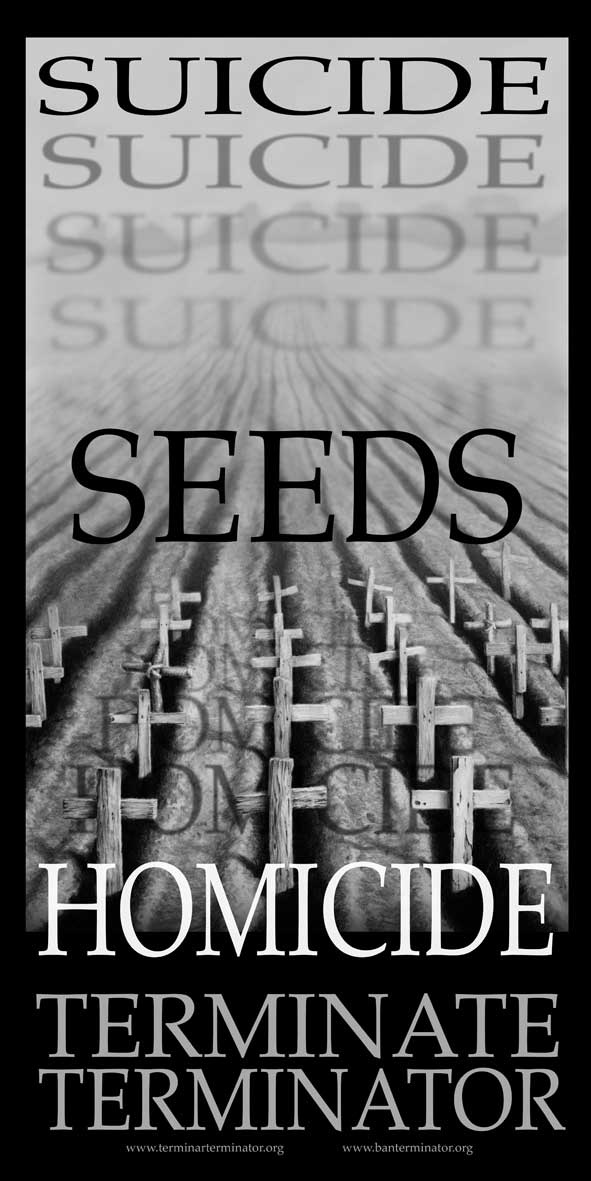
En este Cuaderno, el Grupo ETC identifica a los mayores jugadores corporativos en el control de insumos agrícolas. Junto con nuestro póster Quién nos alimentará: ¿La cadena industrial, o las redes campesinas? el Grupo ETC aclara mitos sobre la efectividad del sistema alimentario industrial.

Putting the Cartel before the Horse...and Farm, Seeds, Soil and Peasants etc: Who Will Control the Agricultural Inputs?

The State of Corporate Concentration, 2013

In this Communiqué, ETC Group identifies the major corporate players that control industrial farm inputs. Together with our companion poster, Who will feed us? The industrial food chain or the peasant food web?, ETC Group aims to de-construct the myths surrounding the effectiveness of the industrial food system.

Ayuda ETCgroup

ETC Group is a small organisation with limited resources and plenty to do. We depend a lot on our collaborations with other groups and individuals and are extremely grateful for offers of support, advice and skilled help. If you would also like to support us in our work, please don't be shy to offer!  There are many ways to contribute to ETC Group. Here are just a few...

New Report: Putting the Cartel before the Horse…and Farm, Seeds, Soil, Peasants

Who Will Control Agricultural Inputs?

News Release
September 9th, 2013

ETC Group publishes its 111th Communiqué today. The 40-page report – “Putting the Cartel before the Horse…Who Will Control Agricultural Inputs?” – provides market data on the world’s major corporate players involved in food and agriculture and analysis of key sectors in the corporate food chain.

La CIA y el control del clima

La CIA y el control del clima
Español

Silvia Ribeiro*

La CIA estadunidense está financiando un estudio sobre geoingeniería (manipulación climática) que durará 21 meses, con un costo inicial de 630 mil dólares. Lo ejecuta la Academia Nacional de Ciencias, con participación de la NASA y la Administración Nacional Oceánica y Atmosférica de ese país. (revista Mother Jones 17/7/2013).

Climat et géo-ingénierie : des technologies pour garantir la mainmise de l’Homme sur la nature ?

Promue comme un panier de technologies visant à lutter contre les dérèglements climatiques par quelques scientifiques et investisseurs, la géo-ingénierie gagne ses galons de respectabilité tout en étant expérimentée de façon illicite. Pour un état des lieux aussi complet que possible, Alter-Echos(www.alter-echos.org) vous propose une interview de Joëlle Deschambault, qui travaille pour ETC Group.

Let's Stop the Glowing Plant Release Project! - Only 10 days left to contribute to ETC Group's campaign

ETC Group needs your support to stop US biohackers and private biotech firm, Genome Compiler Corporation, from carrying out the first ever, intentional release of organisms created through synthetic biology.

Only 10 days left to make a contribution to ETC Group's fundraising campaign to stop the release of synbiotech seeds ! Huge thanks to those who have already contributed.

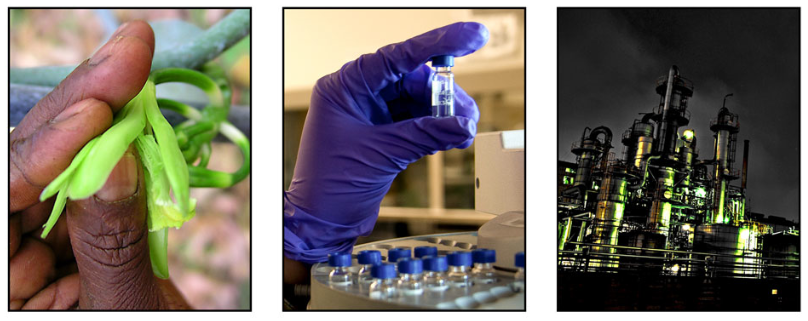
Case Study: Vanilla and Synthetic Biology

Ingredients, Flavours, Fragrances and Synthetic Biology

Recent developments in synthetic biology could impact the $22 billion global flavour and fragrance market and the livelihoods of producers of natural commodities. These developments impact the sustainable use of biodiversity and fair and equitable sharing of benefits from the genetic resources that produce natural plant products. The worlds largest producers of food ingredients, flavors and fragrances are all now partnering with Synthetic Biology companies to develop biosynthetic versions of key high value natural commodities such as saffron, vanilla, vetiver and patchouli - replacing botanical sources.

Verdades de los transgénicos

Verdades de los transgénicos
Español

La Red por una América Libre de Transgénicos (Rallt) agrupa organizaciones y redes de toda América Latina. En su reciente asamblea en Bogotá, con delegados de casi todos los países de la región, además de científicos y académicos invitados, construyeron un panorama detallado lo que han significado los transgénicos. Diesiete años de siembras y el segundo lugar en área global sembrada con transgénicos, han resultado en “desplazamientos, desolación y muerte”. Muertes en sentido literal, de niños fumigados por agrotóxicos, nacidos con malformaciones, de vecinos de campos sembrados que se enfermaron de leucemia y otras dolencias.

Rechazo internacional a la siembra de maíz transgénico en México

Las solicitudes de autorización para la siembra comercial de millones de hectáreas de maíz transgénico en varios estados del norte de México, realizadas por Monsanto y otras empresas desde septiembre 2012 han provocado un amplio rechazo en todo el país, por parte de numerosos movimientos sociales, organizaciones campesinas, urbanas, de consumidores, ambientalistas, estudiantes, artistas y muchas otras. Por ser México la cuna del maíz, el tema es mucho más que solamente nacional, ya que de autorizarse, significaría el hecho inédito de contaminación transgénica del centro de origen de un cultivo alimentario de importancia global.

Why Synthetic Artemisinin Is Still a Bad Idea - A Response to Rob Carlson

Why Synthetic Artemisinin Is Still a Bad Idea - A Response to Rob Carlson
Inglés

Background: At a recent Synthetic Biology Conference in Cambridge UK, Synthetic Biologist Jay Keasling announced that the consortium he was working with now intend to replace the entire global supply of artemisinin (an anti-malarial compound) with their new synthetic-biology derived version.

Biología Sintética: La bioeconomía del despojo y el hambre

La biología sintética va más allá de transferir genes entre especies: busca construir microorganismos auto-replicantes, completamente nuevos, que tengan el potencial de convertir cualquier biomasa o insumo de carbono en cualquier producto que pueda fabricarse a partir de carbono fósil, y mucho más. Desde la perspectiva de la biología sintética, el recurso base para el desarrollo de materiales comercializables y “renovables“ (que no sea petróleo) no lo encontramos en el 23.8 % de la biomasa terrestre que usamos y comercializamos anualmente, sino en el otro 76.2% de la biomasa que ha permanecido hasta hoy fuera de la economía del mercado. La biología sintética ya atrajo la atención de Naciones Unidas y de los gobiernos. Dicha tecnología estuvo en la agenda del Convenio sobre Diversidad Biológica de la ONU durante su reunión en Hyderabad, India y allí los gobiernos acordaron continuar monitoreando la tecnología e informar sobre ello en las reuniones futuras del CBD.

Synthetic Biology: The Bioeconomy of Landlessness and Hunger

Synthetic biology goes beyond transferring genes between species to constructing entirely new, self-replicating microorganisms that have the potential to convert any biomass or carbon feedstock into any product that can be produced by fossil carbons – plus many more.From the perspective of synthetic biology, the resource base for the development of marketable “renewable” materials (that is not from petroleum) is not the world’s commercialized 23.8 % of annual terrestrial biomass, but also the other 76.2 % of annual terrestrial biomass that has, thus far, remained outside the market economy. Synthetic biology has already attracted the attention of the United Nations and governments. The technology was on the agenda of the UN Convention on Biological Diversity that met in Hyderabad, India in mid-October 2012, with governments agreeing to continue monitoring the technology and report back to future meetings of the CBD.

Doscientos millones contra Monsanto

Doscientos millones contra Monsanto
Español

Fueron dos millones de personas que el 25 de mayo manifestaron en 52 países,  en más de 430 ciudades de todo el mundo, contra Monsanto. Pero muchísimos más acompañaron ese día y protestan cada día, de muchas formas, contra Monsanto, contra los transgénicos y el robo corporativo de nuestra alimentación. Por ejemplo, la Vía Campesina, que tiene más de doscientos millones de miembros y ahora preparan su sexta conferencia internacional del 6 al 13 de junio, en Indonesia.

Monsanto Protection Act

Monsanto Protection Act
Inglés

On March 26th 2013 a legal clause takes effect in the United States which allows Monsanto and other multinational GMO (Genetically Modified Organisms) producers to ignore  judicial decisions to stop GMO sowing, either due to irregularities in its approval, lack of health and environmental impact evaluations, new scientific evidence that alerts health hazards or for any other reason. It is a global unprecedented exception now called “Monsanto Protection Act”.

Acta de protección a Monsanto

Acta de protección a Monsanto
Español

26 de marzo pasado (2013) entró en vigencia en Estados Unidos una cláusula legal que permite a Monsanto y las otras trasnacionales de transgénicos ignorar las órdenes judiciales de suspensión de siembra de cultivos transgénicos, sea por irregularidades en su aprobación, por falta de evaluación de impactos ambientales o de salud, por nuevas evidencias científicas que señalan daños sanitarios o cualquier otra razón. Es una excepción sin precedentes a nivel global, bautizada Acta de protección a Monsanto.

News Release: Last Chance for Kickstarter to stop release of risky seeds

Stop the spread of synthetic biology

There is less than a day to go before the popular crowdfunding site Kickstarter.com hands hundreds of thousands of dollars to a controversial project for the widespread and unregulated distribution of over half a million extreme-bioengineered seeds. Kickstarter, which stands to make over $22,000 from the project (1), has steadfastly refused to comment on its listing of a project to make and distribute ‘glowing genetically modified plants’ using Synthetic Biology.

Páginas

Suscribirse a Recent content