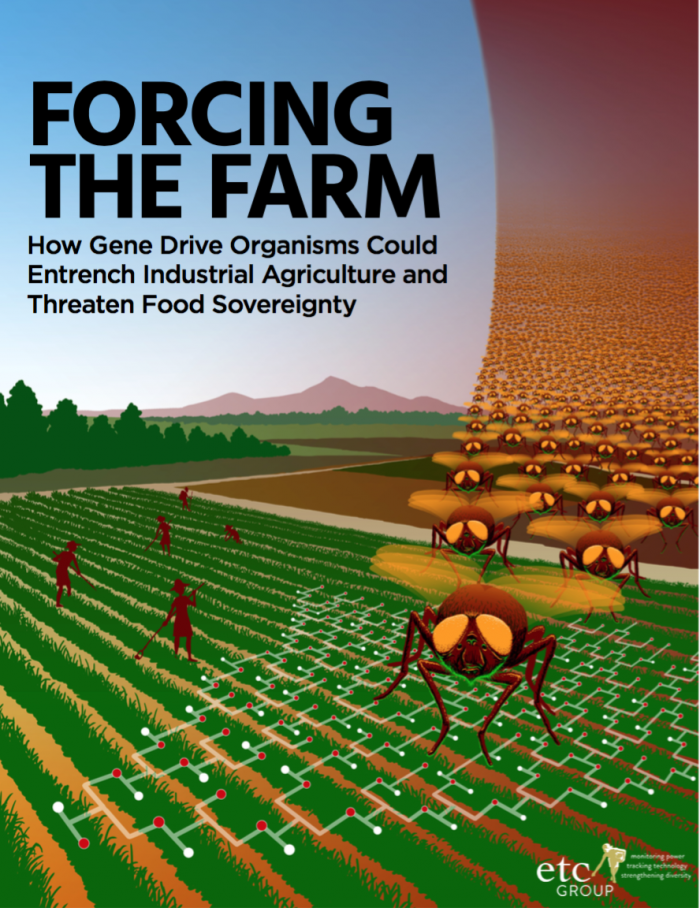
Forcing the Farm
Submitted by Dru Oja Jay on
How Gene Drive Organisms Could Entrench Industrial Agriculture and Threaten Food Sovereignty
» The letter, signed by food movement leaders around the world
Related Fora:

Submitted by Dru Oja Jay on
» The letter, signed by food movement leaders around the world
Submitted by Dru Oja Jay on
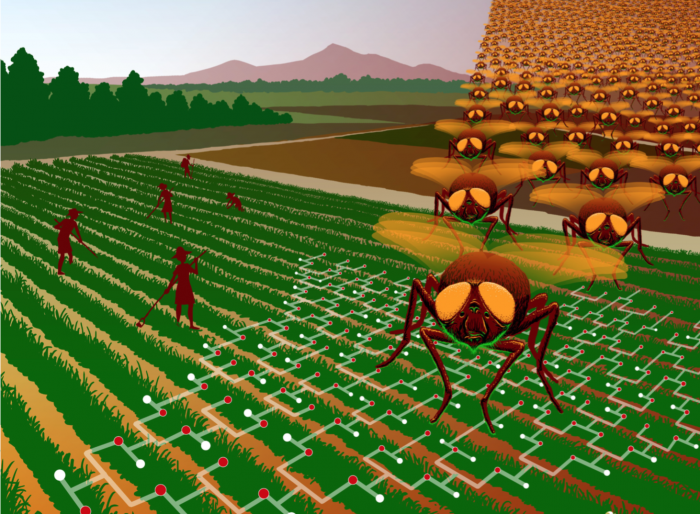
Rome, 16 October 2018 (World Food Day) – Global food movement leaders and organizations representing hundreds of millions of farmers and food workers today set out their clear opposition to “gene drives” – a controversial new genetic forcing technology. Their call for a stop to this technology accompanies a new report, Forcing the Farm, that lifts the lid on how gene drives may harm food and farming systems.
» Download the report (pdf)
Submitted by Dru Oja Jay on
Submitted by Dru Oja Jay on
Submitted by Trudi Zundel on
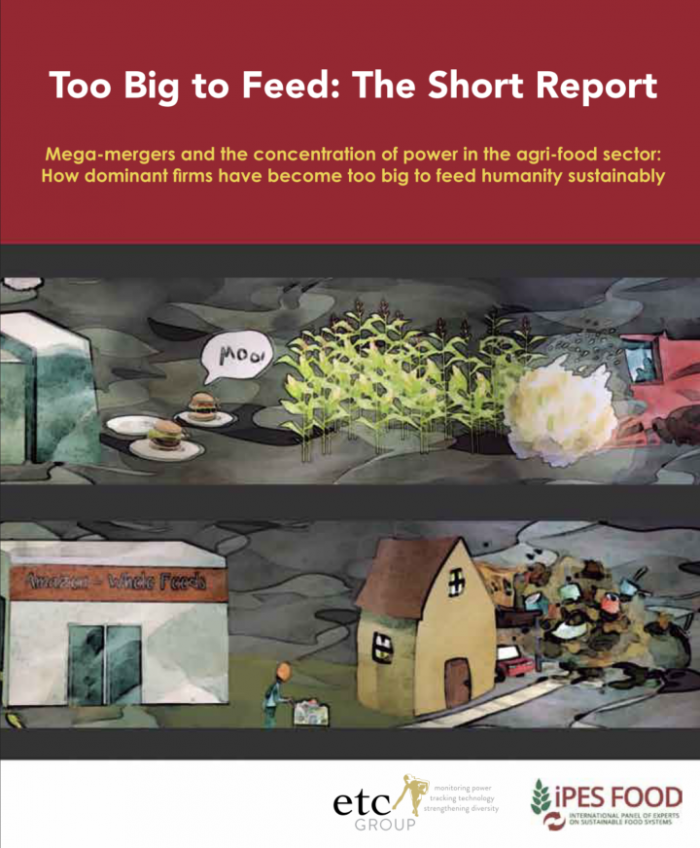
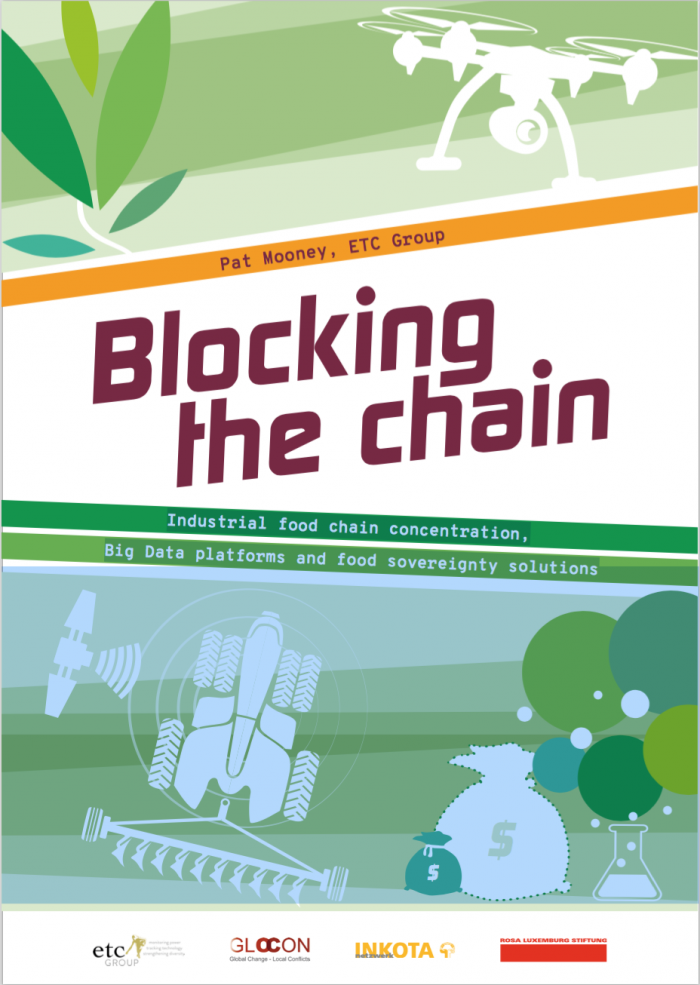
What is corporate concentration, why does it matter for food security, and who are the biggest corporate players in each agrifood sector/"link" in the Industrial Food Chain? This accessible booklet (soon to be available in French and Spanish) answers these questions and more.
Submitted by Dru Oja Jay on
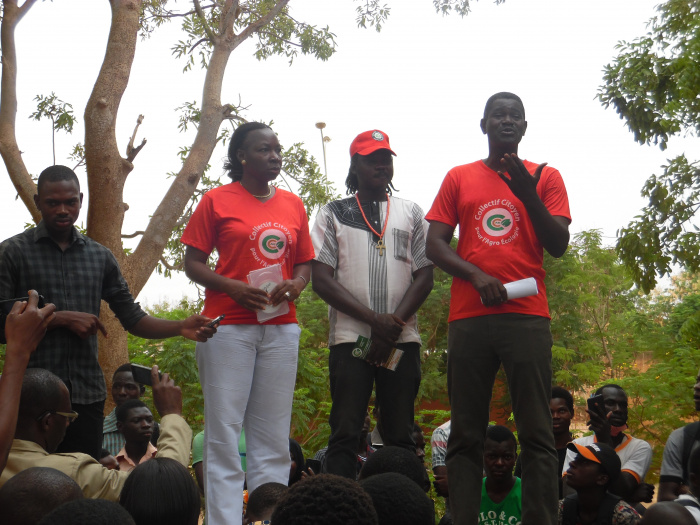
MONTREAL, July 4, 2018 - United Nations biodiversity negotiations are underway in Montreal, but a key African expert is missing from the fray. Ali Tapsoba, President of the organization Terre à Vie in Burkina Faso, was planning to speak at two events on behalf of Burkinabé civil society who oppose the release of gene drive mosquitoes, a controversial new biotechnology, in their communities.
His visa application was denied without explanation by the Canadian embassy in Dakar on Friday.
Submitted by Dru Oja Jay on

FOR IMMEDIATE RELEASE
MONTREAL, MEXICO CITY, SÃO PAULO, February 22, 2018—The largest rural movements in Brazil, representing well over a million farmers, are protesting a new Brazilian regulation that would allow release of gene drives, the controversial genetic extinction technology, into Brazil’s ecosystems and farms.
Submitted by Dru Oja Jay on
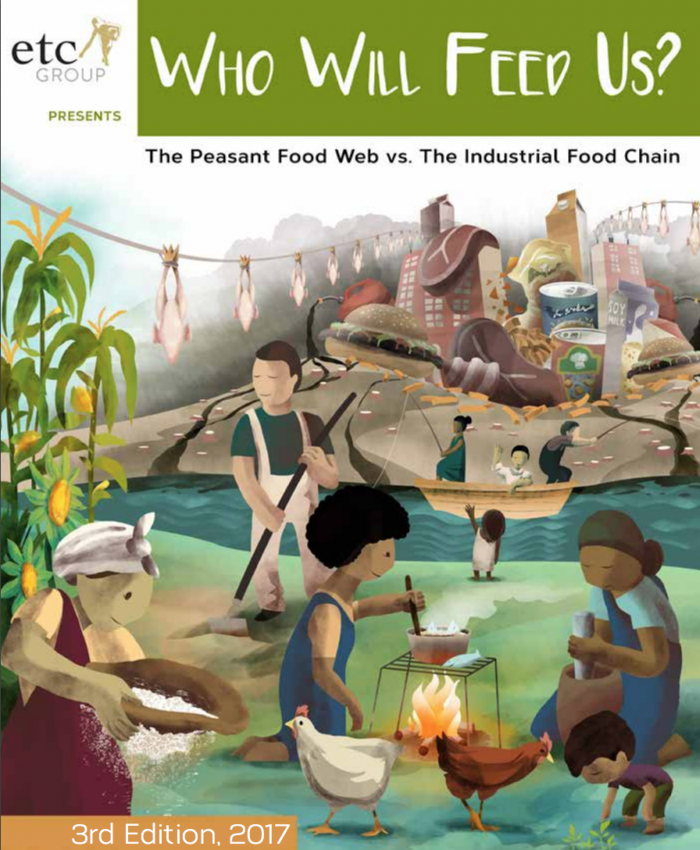
We are told that it is big agribusiness, with its flashy techno-fixes and financial clout, that will save the world from widespread hunger and malnutrition and help food systems weather the impacts of climate change. However, a new report from ETC Group shows that in fact, it is a diverse network of small-scale producers, dubbed the Peasant Food Web, that feeds 70% of the world, including the most hungry and marginalized people.
Submitted by Dru Oja Jay on
(Read the news release about the report launch.)
Who Will Feed Us, now in its third edition, compares the industrial food system with peasant farming. Industrial farming gets all the attention (and most of the land). It accounts for more than 80% of the fossil fuel emissions and uses over 70% of the water supply used in agriculture, but it actually produces only about 30% of the world's food.
Submitted by Trudi Zundel on

In May 2017, ETC Group presented their proposal for a G.O.A.T.S approach to Science, Technology and Innovation (STI) governance at the annual UN STI Forum.
Submitted by Joana Chelo on
OTTAWA, CANADA – ETC Group today released an end-of-year update on the high-profile mergers announced in the agri-inputs industry in 2016. Arguing that the three announced seed/pesticide mega-mergers will only be decided in 2017 and possibly much later, ETC’s new update, entitled “Software vs. Hardware vs. Nowhere,” shows that it is not only the $97 billion per annum seed and crop chemicals market that is at stake in the three announced mergers.
Submitted by Trudi Zundel on
Submitted by Joana Chelo on
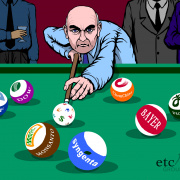
Wednesday’s confirmation that Monsanto and Bayer have agreed to a $66 billion merger is just the latest of four M&A announcements, but at least three more game-changing mergers are in play (and flying under the radar). The acquisition activity is no longer just about seeds and pesticides but about global control of agricultural inputs and world food security. Anti-competition regulators should block these mergers everywhere, and particularly in the emerging markets of the Global South, as the new mega companies will greatly expand their power and outcompete national enterprises. Four
Submitted by Silvia Ribeiro on
Since August 1st, the news is spreading that Monsanto had to abandon the construction of one of the biggest factories in the world for producing transgenic seed that was to be installed in Córdoba, Argentina, in the municipality of Malvinas Argentinas. From there they had planned to distribute seeds to Latin America and beyond. This is an occurrence of enormous importance, that the company has not wanted to admit publicly, because the reason for their exit is the persistent popular resistance from neighbourhoods, youths and mothers, who have blocked the factory since 2013.
Submitted by Trudi Zundel on

Where to find us and what we'll be up to at the World Social Forum in Montreal, QC, from August 9-14, 2016.
Submitted by Silvia Ribeiro on
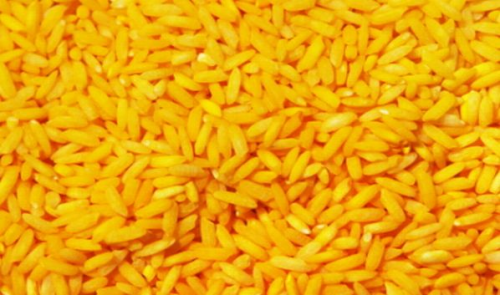
By Silvia Ribeiro*
It is not often that so many prominent scientists reveal their ignorance on a topic in such a short space. This was the case for the public letter that a hundred Nobel laureates published on June 30th defending genetically modified organisms (GMOs), particularly the so-called “Golden Rice,” and attacking Greenpeace for its critical stance on these crops. The letter is so full of high-sounding adjectives and epithets, false claims and poor arguments that it seems more like a propaganda tirade from transgenic companies than scientists presenting a position.
Submitted by Joëlle Deschambault on

Coming in at over 200 pages, today’s National Academy of Sciences (NAS) report, 'Gene Drives on the Horizon’ is weighty but disappointing. It fails to properly address three of the most pressing issues raised by the controversial new technology of CRISPR-CAS9 gene drives. Dubbed, the ‘mutagenic chain reaction’ by its inventors, RNA-guided gene drives are a high-leverage synthetic biology technology invented only last year.
Submitted by Joëlle Deschambault on
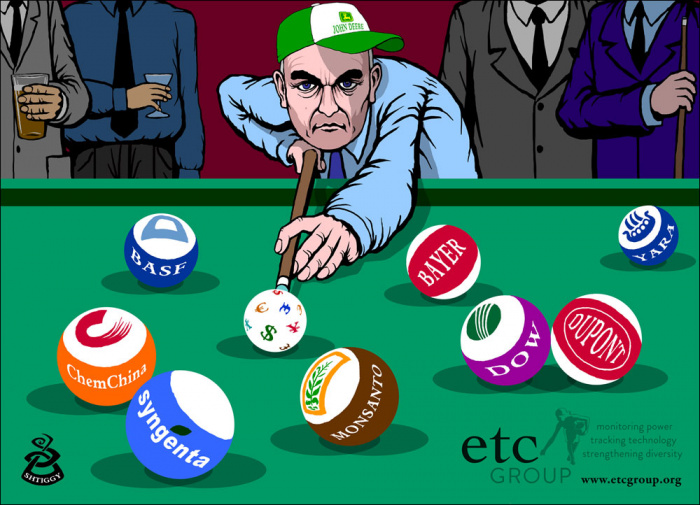
Briefing Note, May 31st, 2016
Submitted by Joana Chelo on

La Via Campesina, GRAIN and ETC Group
Submitted by Joëlle Deschambault on
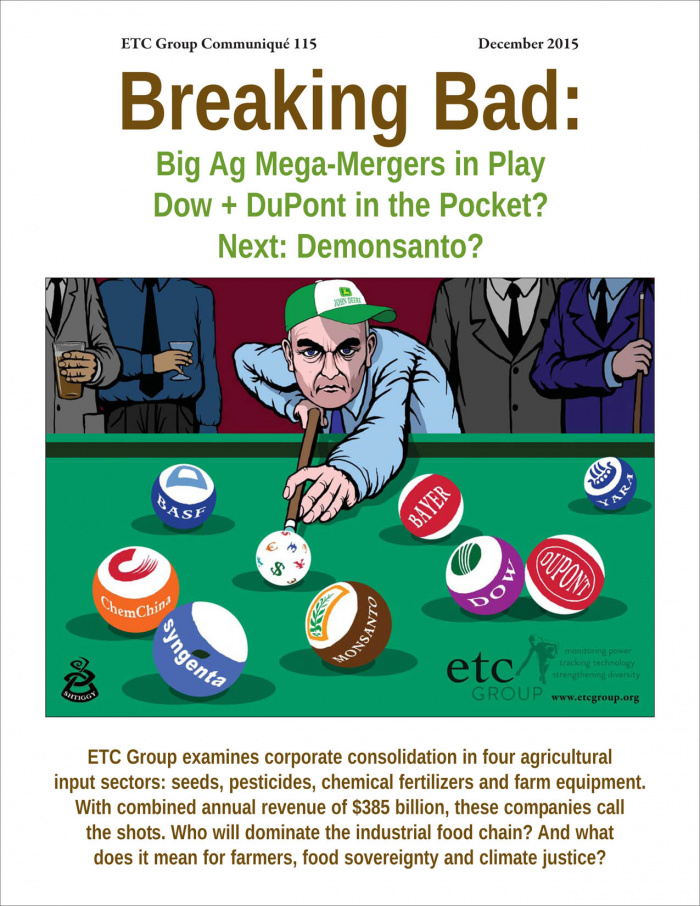
December 2015. In this new report, ETC Group examines corporate consolidation in four agricultural input sectors: seeds, pesticides, chemical fertilizers and farm equipment. With combined annual revenue of $385 billion, these companies call the shots. Who will dominate the industrial food chain? And what does it mean for farmers, food sovereignty and climate justice?
Issue

Find out more about ETC Group, or contact us.