Left Behind by Design: Technology Assessment report, Zambia
Submitted by Ronnie Hall on
Digital Agriculture, Land Rights, and the Exclusion of Small-Scale Farmers in Mpongwe District

Mpongwe District, Copperbelt Province, Zambia, 17–18 April 2026

Submitted by Ronnie Hall on
Mpongwe District, Copperbelt Province, Zambia, 17–18 April 2026
Submitted by Ronnie Hall on
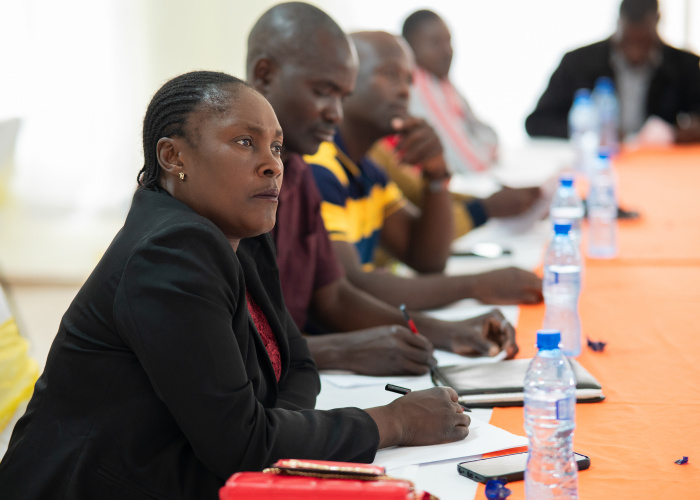
Chingola District, Copperbelt Province, Zambia, 15–16 April 2026
Chingola District, in the Copperbelt District in Zambia, lies at the convergence of two of the most consequential global forces of the twenty-first century: the rapid expansion of digital technology and artificial intelligence (AI), and the accelerating extraction of critical minerals required to sustain that expansion. As global demand for these technologies intensifies, so does the pressure on the communities living above the ore deposits.
Submitted by Ronnie Hall on

Picture the scene: it’s late 2026 and you’re crossing the Atlantic Ocean. You gaze down at the sea lapping gently at the sides of your ship - but instead of clear seawater, you find that you are surrounded by invasive seaweed, stretching as far as the eye can see, in all directions. You’ve ventured into a vast Sargassum giga-farm, extending from horizon to horizon, covering an area the size of a country.
Submitted by Ronnie Hall on

According to experts from ETC Group (Action Group on Erosion, Technology and Concentration), the commercial food model is so vulnerable that this blockage could drive up food prices, leading to a global food crisis. Researchers are therefore issuing an urgent call to strengthen local food systems based on food sovereignty and agroecology.
Submitted by Ronnie Hall on
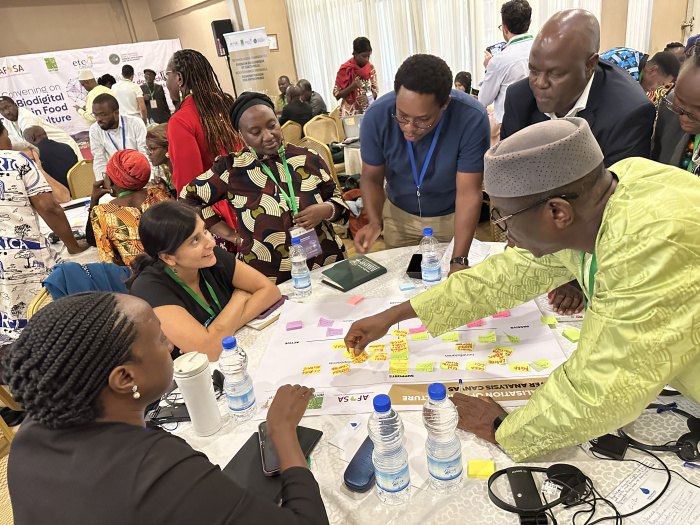
This article was written by Matthew Canfield, Sabrina Masinjila, Barbara Ntambirweki, and was originally published by Agroecology Now. Central to the authors' argument is the question of who ultimately stands to benefit from this so-called “fourth agricultural revolution.” They contend, first and foremost, that data justice must be grounded in the lived experiences and livelihoods of food producers.
Submitted by Ronnie Hall on
Submitted by Veronica Villa on
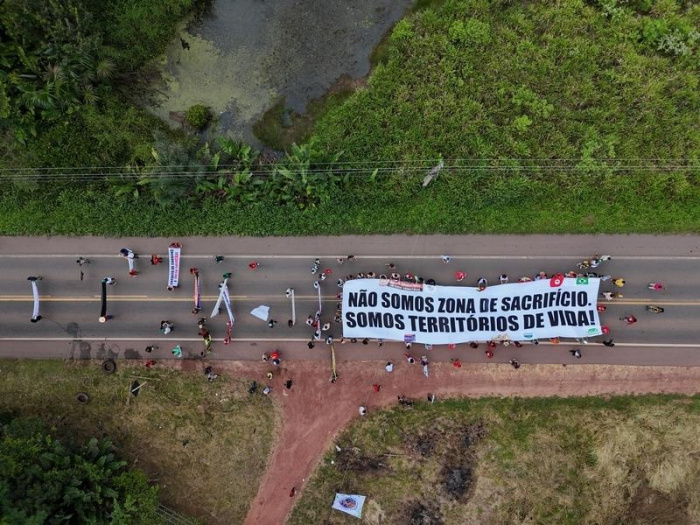
On October 29, 55 movements and organizations from 14 Latin American and Caribbean countries published a powerful MANIFESTO rejecting carbon markets and defending territories against an avalanche of projects that are causing damage throughout the region. This manifesto challenges COP30 of the UN Framework Convention on Climate Change (UNFCCC), which will begin in the first week of November with high-level meetings.
Submitted by Ronnie Hall on
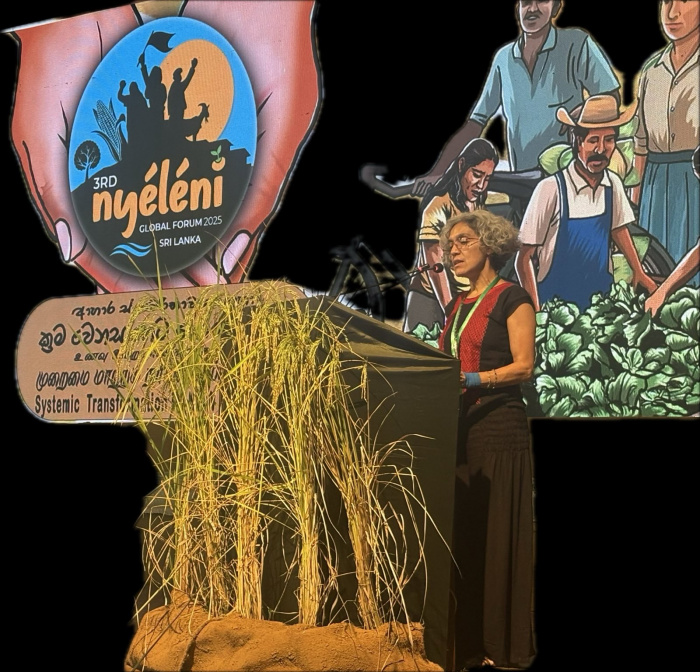
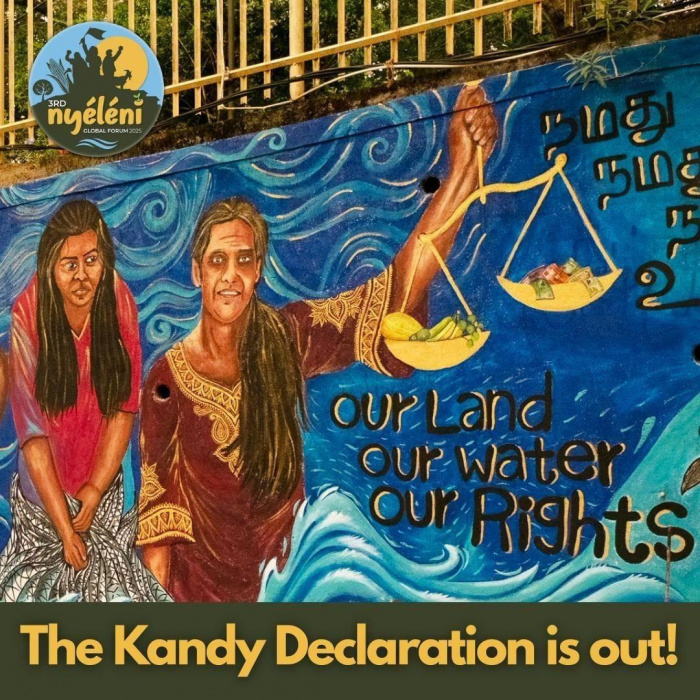
As the 3rd Nyéléni Global Forum in Sri Lanka draws to a close, it’s exciting to reflect on the fact that this country - inhabited and loved by its people from coast to coast, and home to some of the world’s most biodiverse, verdant and abundant forests, rivers and wetlands - is also poised to become the birthplace of a new global meta-movement of social movements committed to bringing health and vitality back to the planet’s communities, countries and climate.
Submitted by Ronnie Hall on

We see a gathering tsunami of emerging (and converging) corporate technologies being super-charged by increasingly rapid developments in digital/AI, bioengineering and geoengineering technologies. The new corporate constellation of a few men with vast personal wealth operating within the existing hegemonic capitalist financial system is also being used to influence key governmental policy-making spaces, sidelining democratic processes and excluding civil society.
Submitted by Ronnie Hall on

Webinar link: https://www.youtube.com/watch?v=PAN3cYNMNmY

Find out more about ETC Group, or contact us.