Those who fry the planet and geoengineering
Submitted by Silvia Ribeiro on
Those who fry the planet and geoengineering
English
Silvia Ribeiro*

Submitted by Silvia Ribeiro on
Silvia Ribeiro*
Submitted by Dru Oja Jay on

“The future has arrived — it’s just not evenly distributed yet.” —William Gibson, 1992
As the year careens to a close, summing up the trends, portends and hairpin bends of 2017 feels like a Pandora’s unboxing of mashed up dystopias. Call it technological convergence or the fourth industrial revolution, but the familiar cyberpunk themes of robotics, Artificial Intelligence and bioengineered economies are now becoming cyber-industrial fact.
Submitted by Dru Oja Jay on

It's usually the case at ETC that when we encounter success, we've usually already moved on to the next campaign. But in our 40th year, we decided to take a moment to celebrate by looking back at some of our favourite wins. We like them all, so they are presented here in roughly chronological order.
7. Seed Treaty
Submitted by Dru Oja Jay on

As 2017 draws to a close, we’re excited to announce our 2040 Fund. As technologies and corporate power gain critical mass, ETC’s contribution will shift from from fighting technologies one by one to defining the “positive possible” of the longer term, and illuminating pathways out of the current mess.
To make that possible, our goal is to build a base of donors to our 2040 fund who contribute an average of $20.40 per month. Want to be part of it? Click here to donate now.
Or read on to find out more.
Submitted by Dru Oja Jay on

WASHINGTON, D.C. — Over 1,200 emails released under open records requests reveal that the U.S. military is now the top funder and influencer behind a controversial genetic extinction technology known as “gene drives” – pumping $100 million into the field.
Submitted by Dru Oja Jay on
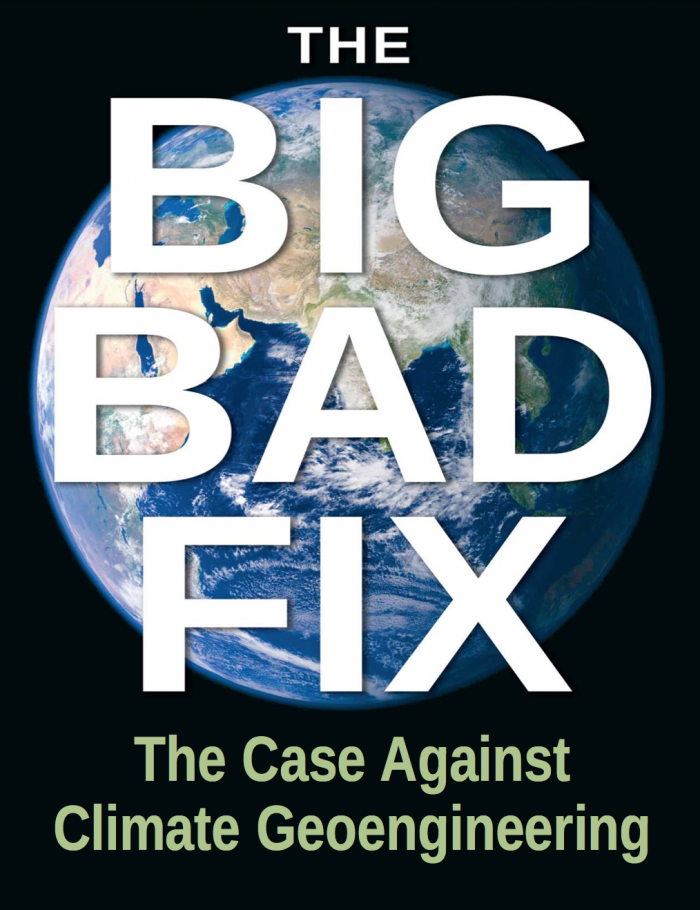
ETC Group, BiofuelWatch and Heinrich Boell Foundation present a comprehensive argument against geoengineering in this report.
Submitted by Dru Oja Jay on
This interactive geoengineering map, prepared by ETC Group and the Heinrich Boell Foundation, is an attempt to shed light on the worldwide state of geoengineering by showing the scope of research and experimentation. There is no complete record of weather and climate control projects so this map is necessarily partial.

ETC is is undertaking a process of reflection and transition, and we want to hear your thoughts on our work so far. Your responses will help us prioritize and communicate going forward.
Everyone who fills out the survey will be entered to win a special prize. Thank you!
Submitted by Dru Oja Jay on

We are told that it is big agribusiness, with its flashy techno-fixes and financial clout, that will save the world from widespread hunger and malnutrition and help food systems weather the impacts of climate change. However, a new report from ETC Group shows that in fact, it is a diverse network of small-scale producers, dubbed the Peasant Food Web, that feeds 70% of the world, including the most hungry and marginalized people.
Submitted by Dru Oja Jay on

(Read the news release about the report launch.)
Who Will Feed Us, now in its third edition, compares the industrial food system with peasant farming. Industrial farming gets all the attention (and most of the land). It accounts for more than 80% of the fossil fuel emissions and uses over 70% of the water supply used in agriculture, but it actually produces only about 30% of the world's food.
Submitted by Veronica Villa on

Is it possible to govern Geoengineering?
When speaking about geoengineering governance, a sensible first question is whether geoengineering, with its inherently high risks, unequal impacts, long term effects and broad geopolitical, military, environmental and global justice implications, is even possible to “govern.”
Submitted by Veronica Villa on

WASHINGTON, D.C. – Creators of a fake-meat burger made with a high-profile genetically engineered ingredient may have landed their experimental industry in a sizzling food safety mess, casting doubt on a Silicon Valley foodtech investor bubble. Joint Press Release from ETC Group and Friends of the Earth.
Submitted by Trudi Zundel on

In May 2017, ETC Group presented their proposal for a G.O.A.T.S approach to Science, Technology and Innovation (STI) governance at the annual UN STI Forum.
Submitted by Anonymous on
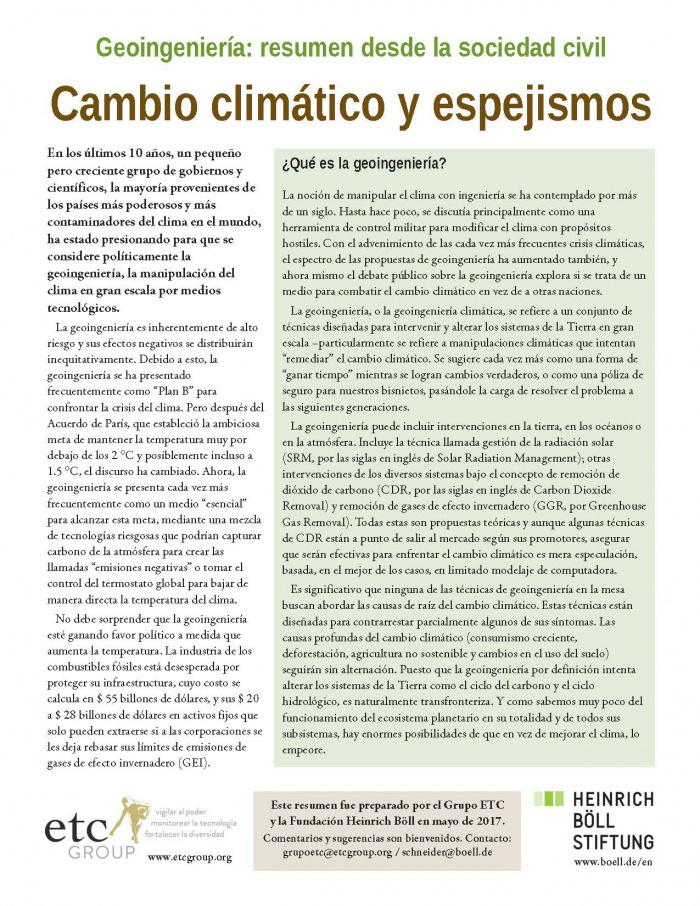
Submitted by Anonymous on
12 May 2017
On 27 April 2017, 108 civil society organizations signed a letter requesting the IPCC to reconsider its list of authors for the upcoming Special Report on keeping global warming below 1.5°C. Two senior employees from major oil companies were selected among the authors for the Report, which the letter considers a major hurdle to make a fair report, and a violation of the IPCC's conflict of interest policy.
Submitted by Trudi Zundel on
Geoengineer David Keith first made his intention to launch a geoengineering trial public back in 2012 – saying then that it would take place “within a year” and naming Fort Sumner in New Mexico as the likely location.[1] All indications were that he was ready to move forward, but was first waiting to get a signal of public support from the US government, ideally in the form of funding. Tellingly, the experiment never came.
Submitted by Trudi Zundel on
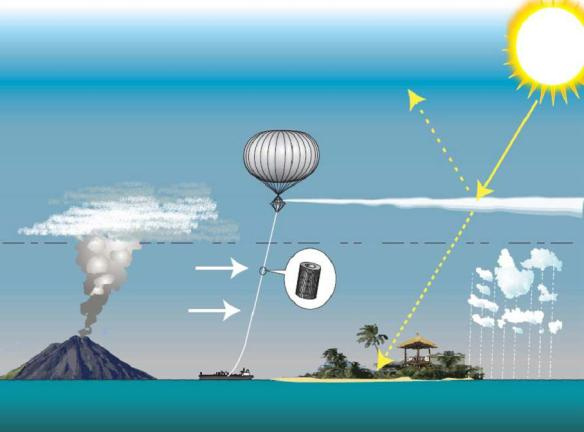
Solar Radiation Management (SRM) describes a set of geoengineering techniques that aim to counter human-made climate change by artificially increasing the reflection of heat from sunlight (solar radiation) back into space. Some advocates have started using the term “solar geoengineering” – but these techniques are not related to solar power production.
Submitted by Trudi Zundel on

Washington, DC – The Trump administration’s repudiation of the UN’s 2015 Paris agreement on climate change and its rollback of the EPA and other US agencies on monitoring and mitigating global warming has created an unexpected opportunity for a rogue group of climate researchers to seek support for an alternative climate change strategy.
Submitted by Anonymous on

So you say you want a (fourth) revolution, well you know…
Fashionably late and just in time for the Chinese New Year of the Rooster, ETC Group once again offers a tonque-in-cheek wake-up call and look-back at the last thirteen months (spoiler: despite our best hopes, waiting the extra month didn’t make the news any cheerier)
Submitted by Trudi Zundel on

CANCUN, MEXICO — This week, 196 countries meeting at the 2016 UN Convention on Biodiversity (CBD) Conference of the Parties made progress on the global governance and oversight of synthetic biology. Synthetic biology (syn bio) has become one of the most fiercely debated topics at the Biodiversity Convention, almost 7 years after civil society first brought the need for precaution and regulation of the new set of biotechnologies to this UN body.

Find out more about ETC Group, or contact us.